Can you stop your bank branch closing?

It’s starting to look like the high street bank branch could go the way of the cheque – somehow limping along but widely expected to be ditched before too long. NatWest and RBS are to shut just under 160 branches between them, and that comes on top of well over 1,000 branches from all banks and building societies that closed nationally over 2015 and 2016, according to the consumer group Which?.

To an extent it is understandable that banks are behaving this way. HSBC, as an example, reports that footfall within its banks has fallen by an average of 40 per cent over the last 5 years as a result of customers turning to banking online.

And research carried out by CACI on behalf of the British Banking Association shows that customers used their mobile phones to check their current accounts 895 million times in 2015 alone, which is more than double the 427 million times they entered their branches. Two years on and there is no evidence that trend is reversing.

The same report predicted that by 2020 that number will rise to 2.3 billion times, far more than internet, branch or telephone banking combined.

But, as Which? highlights, while 56 per cent of people now use online banking, including apps, that still leaves 20 million who rely on bricks not clicks.

Can you stop a branch from closing?

There have been a number of protests against specific branch closures but, by and large, they have failed. And, in a surprising development last year, the Campaign for Community Banking Service closed down, with its founder bluntly telling the press that the public should not be misled into thinking they can stem the tide of closures.

The organisation had campaigned for banks to be made to club together and launch neutral shared branches, yet this was never supported by the Government or the banks themselves.

So far, so bleak for those who want to know that there is a real branch they can visit to discuss their finances face-to-face with a real person.

It’s no longer even possible to rely on banks’ pledges to remain open. For example, RBS had previously pledged to always retain a branch in those locations where it had become the last bank in town. However, it dropped that pledge and Moray McDonald, managing director of the personal and business banking division, told the Treasury Committee why.

“We are seeing a revolution in how our customers want to bank and interact with us. We have been literally, candidly, taken aback. In the last three years, 300 million transactions that would have taken place in branch now take place online or on mobile. We have 6 million habitual online users and 3 million mobile users, so we have seen our customers telling us they want to do something different. We have to follow our customers and decide where we want to invest in resource in order to support them best. As a result of that, we have decided that there are some locations where the footfall is getting so low that our customers are not using those locations.”

However, banks are not like garden centres; they can’t just close their doors and focus on their websites. The BBA and its member banks have adopted a protocol – updated last year – on bank closures.

This includes telling the community as soon as possible that their branch is to close and providing specially trained staff in branches that are due to close to help customers with alternative banking methods. It also includes working proactively with elderly or more vulnerable customers to help understand their requirements.

Most importantly, banks must ensure continued provision of alternative ways to bank. And that includes a way to actually carry out in-person banking. Enter another grand old institution looking for new ways to survive in an increasingly digital era: the Post Office.

Wait a minute Mr Postman

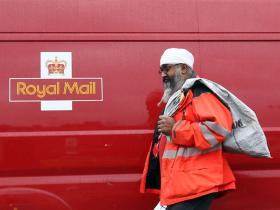
Around 99 per cent of UK personal bank customers and more than three-quarters of business customers can now do their day-to-day banking within any of the 11,000 Post Office branches across the UK. Admittedly, only basic banking such as balance enquiries, cash withdrawals and business deposits, although customers can also access the Post Office’s own range of financial products such as insurance, mortgages and savings.

A spokesperson for the Post Office explains: “Our branches provide a balance between the clicks – mobile and online – and bricks – a physical local presence for face-to-face transactions. By making sure alternative counter-based banking services are accessible through the Post Office, the impact of local branch closures on communities can be minimised.”

She adds that the access provided by the Post Office is most welcome within remote and rural areas, as well as within the less affluent parts of towns and cities.

“The Post Office is playing an important part in financial inclusion. It is the most accessible place for handling financial transactions, particularly in remote areas – ensuring customers have the opportunity to access cash and basic banking services whenever and wherever they need, providing a vital stimulus for local businesses.”

Looking for credit card or current account deals? Search here

New £1 coin: A man claims the 'most secure coin' in the world has already been forged

The new 12-sided £1 coin, which has been in circulation for less than a month, has been described by the Royal Mint as “the most secure” in the world. But a charity worker claims he already found a fake version of the new coin.

Roy Wright believes his partner was given a fake £1 coin in change when shopping at a Co-op store in Surrey after he identified  little differences with the original one.

Mr Wright told the Sun: “The coin is completely different and is more rounded around the edge.

  • Read more

7 things you might not have noticed that make the new £1 safer

“There is clearly space between the engraving lines, it’s a different size, the Queen’s head is to the left, and there is no detail of the head of the thistle – it’s just a blob.

“The stem of the coin has got no detail on it, there are a lot of things wrong with it.”

Mr Wright also reportedly said the coin was heavier and had no hologram.

A spokesperson for the Royal Mint told The Independent that is has not had an opportunity to examine the coin, but the organisation remains "confident" that it is not counterfeit.

"We are not aware of any counterfeits entering circulation but welcome the public’s caution," the Royal Mint said.

"The organisation produces around five billion coins each year, and will be striking 1.5bn new £1 coins in total. As you would expect, we have tight quality controls in place, however variances will always occur in a small number of coins, particularly in the striking process, due to the high volumes and speed of production," it added. 

After almost 34 years in circulation, the old £1 coin, which is still in circulation, has become increasingly vulnerable to sophisticated counterfeiters. An estimated one in 30 of those pound coins is fake, according to the Royal Mint.

The 12-sided coin boasts new security features, which include a hologram-like image that changes from a £ symbol to the number one when the coin is seen from different angles. Around 1.5 billion of the new coins are being struck.

More than 200,000 “trial coins”, were issued to businesses and retailers in preparation for the official release on 28 March and collectors are now desperate to get their hands on them, even though the Royal Mint has made clear that these coins don't have legal tender status and have no redeemable value.

On eBay, bidding for the trial coins is starting at between £150 and £250 with some selling for up to £6,000.

How the General Election affects pensions, small businesses and expats

As the Government rushes to deal with the small matter of a snap general election, huge changes to financial legislation are being swiftly stripped away in a desperate bid to get everything wrapped up before Parliament rises on Wednesday. 

That’s when the weird, no-mans-land period of purdah begins, during which central and local government is prevented from making announcements or changes that could benefit or hinder specific candidates or parties. And that includes finance and taxation plans.

The speed of next month’s vote means the window of opportunity is very, very short - a fact not lost on policymakers.

“The snap election has given the UK Government an excuse to pick and choose which bits of legislation it would prefer to defer to a later date,” says David Truman, tax partner at accountancy firm, Menzies LLP.

“It is vital that all draft legislation receives proper parliamentary scrutiny before it is implemented and if there is not going to be time for this, the Government is right to defer it. 

“However, the Government should make it clear whether the legislation is genuinely being deferred to allow more time for debate and amendments, or whether it is being abandoned altogether. 

“Deferring legislation without any information about time-scales is adding to the current climate of uncertainty.”

And that’s precisely the problem. 

Some estimates suggest that up to 50% of the upcoming Finance Bill has been culled in the blink of an eye for example, some of which had, theoretically already come into effect. 

With little indication of when or if it will be re-instated, for some consumers caught out by shifting sands, the consequences could last a lifetime.

Pensions

A particularly controversial plan, the most prominent casualty of the tight timetable is the change to the amount of __money anyone over 55 who has accessed their pension fund as part of recent ‘pensions freedoms’ can invest in their retirement fund each year. 

Because of fears that policyholders could withdraw and reinvest funds to secure a double hit of tax relief, the Money Purchase Annual Allowance (MPAA) had - in theory at least - already been cut from £10,000 a year to just £4,000 from this month. 

The move has been met with fierce, but ignored, objections from the entire pensions industry which warns that many of those who have taken advantage of easier, tax-free access to their cash as part of the freedoms are still working.

Carry on building up your pension pot as the government has encouraged you to do, and you risk heavy taxation, they say. 

The good news is that the reduction is part of the changes that have been axed.

But Richard Parkin, Head of Pensions Policy at Fidelity International warns this is not likely to be a change of heart.                         

“I’d love to believe that government has changed its mind on the MPAA reduction but it seems that it’s just a temporary casualty of the pre-election wash up period,” he says. 

“However, because Parliament is being dissolved the bill can’t carry over and a new bill will need to be introduced after the election. 

That at least gives the opportunity for government to rethink this policy which we believe will have a negative impact on those saving responsibly for their retirement. Indeed, HM Treasury has since confirmed that they have no evidence of the abuse that this measure was intended to curtail.”

But that’s not all. 

“Simultaneously, the Government has shelved one anti-saving policy by delaying the reduction in the Money Purchase Annual Allowance, while also pulling the rug from under employers and their employees hoping to take advantage of up to £500 of funded advice in the workplace,” says Kate Smith, Head of Pensions at Aegon. 

“This blocks access to much needed financial advice to help employees make more informed retirement plans and seems inconsistent with other initiatives to encourage pension saving and retirement planning in the workplace.”

Government has also shelved the Pensions Schemes Bill, which would have given the Pensions Regulator extra powers to manage Master Trusts, as well as its response to the review of the workplace auto-enrolment scheme and its formal and highly contentious response to a review of the state pension age, due next month. 

Though it is unlikely to have any immediate impact as it will really only affect savers under 40s, who are still a couple of decades from retirement, Ms Smith adds that it proposes that the state pension age should rise faster than currently planned, rising to 66 by 2020, 67 by 2028 and 68 by 2046.

Family

Nor are the cuts to legislation solely around pensions. Plans which would have meant an increase in probate fees of to up to £20,000 from as little as £155 have also been put on hold.

“A Grant of Probate gives the people dealing with your estate the authority to deal with your assets. It is the same regardless of the size of the estate so by linking the fee to the size of estate the government was introducing a new tax,” notes Jeanie Boyle, Chartered Financial Planner at wealth manager EQ Investors.

“The fees need to be paid upfront. Where the estate has cash available it this is relatively simple, but in cases where the estate has little cash but valuable property, the executors or beneficiaries will need to pay the fees themselves.

“The election delay means the people dealing with your estate won’t be faced with a much bigger upfront bill. Even fairly simple estates with only a family home as the main asset could have seen a sharp rise in probate fees.”

Small businesses

For small firms and one man bands there has also been a welcome temporary reprieve. 

“Small business owners have now dodged not one but two bullets from the Budget,” says Alistair Bambridge, partner at Bambridge Accountants.

“Last month the Chancellor announced two measures that would have hit entrepreneurs hard – an increase in their National Insurance contributions and a change to the way they are taxed on dividends.

“Within days, the Chancellor’s National Insurance plan was dropped in an embarrassing U-turn. Now the snap election has come to business owners’ aid by knocking into the long grass the planned change in the tax on dividends.

“Many of Britain’s army of small business owners choose to pay themselves through dividends rather than salary as it can be much more tax efficient to do so. At present the first £5,000 of dividends are free of tax, but under the Chancellor’s plan this would have been slashed to £2,000 from next April.

“With this measure set to be shelved as parliament is dissolved to make way for the election, small business owners across Britain will be breathing another big sigh of relief.” 

They’ll also be pleased that deadlines for moving all small businesses and individuals to online tax recording under the catchy title ‘Making Tax Digital’, which have caused endless confusion, not least in the way records and declarations need to be submitted, has become another casualty of time pressures. For now.

Expats

Then there are a whole host of changes to the way assets are taxed depending on residency that too have fallen by the wayside. Important for those living overseas, they included changes to the length of time required to be deemed a resident or non-resident for tax purposes and the treatment of UK property when it comes to inheritance tax.  

“There have been many twists and turns to this point and the decision to defer the enactment of the legislation is likely to be viewed as more of the same,” Mr Truman adds.

“We will be advising non-domiciled individuals to continue to plan for the rule changes and the introduction of the new ‘15-year rule’ on the basis that the draft legislation is still likely to be implemented at some stage this year.”

Looking for credit card or current account deals? Search here

Will a snap general election affect your investments?

The starting gun on the next general election has been fired so unexpectedly that the report has been felt throughout the country. But the first tangible response was a swift rally in the pound, putting pressure on the UK stock market.

“The pound was the big winner from news that a UK general election is in the pipeline, as currency markets bet on the current Government winning a greater majority,” says Laith Khalaf, senior analyst at Hargreaves Lansdown.

“The rising pound helped heap pressure on the UK stock market, which was already on the back foot thanks to declining iron ore prices hitting the resources sector. Of course the benchmark FTSE 100 is far from a pure barometer of the perceived health of the UK, given the global nature of the companies that constitute the index.”

Canny investors may be wondering whether they can capitalise on political events. Yet given the recent unexpected election and referendum outcomes, many will be nervous of gambling on the doing so.

And Khalaf believes the election is a distraction that most people should look beyond. He says: “The big risk investors face from an election is that they let it disrupt their financial plans. In the short term, market sentiment can be driven by political events, but investors should look beyond any noise as politicians hit the campaign trail, and keep focused on their own long term savings goals.”

Danger and opportunity

Nevertheless, some people are suggesting there could be opportunities ahead. Adrian Lowcock, investment director at Architas, says: “General elections create uncertainty and markets do not like uncertainty. The market has begun to price this in and there is likely to be an ‘uncertainty discount’ on the UK stock market until the election result is known. 

“Given that the FTSE 100 is trading close to all-time highs and we are seeing an increase in geo-political uncertainty investors should prepare for increased volatility over the coming weeks and hold a diversified portfolio of equities and bonds as well as property and gold.  Having some cash set aside at times of uncertainty will give investors the flexibility to act as more information becomes known.”

Of course, everyone has a political opinion and it may be hard for some investors to prevent that from colouring their predictions and strategy. Kerim Derhalli, CEO and founder of invstr, says: “Politics are one of the most important considerations in making investment decisions. Political decisions affect economic policy and economic outcomes which, in turn, impact financial markets.

“In an increasingly divided world, elections are proving to have a big impact on financial markets. The resulting strengthening of the pound has led to a fall in the UK stock market, just as the fall in the pound last June led to a stock market rally. The key to investing is not to impose one's own beliefs on the market, but to try to understand how other people will interpret political events.”

Gambling with politics

However, many commentators argue that it is simply too dangerous to plan an investment strategy around the election.

Mike Neumann, head of investment management at boutique wealth manager EQ Investors, says: “Attempting to second-guess short term market moves is a dangerous game. Betting on short term moves is more likely to lead to probabilistic outcomes – heads you win, tails you lose – rather than form the basis of a solid investment strategy.

“We’d urge investors to look beyond political events and build portfolios based on their needs rather than focus on the rhetoric of political banter.”

And KPMG’s head of investment strategy, pensions, Simeon Willis agrees that speculating on political events is a risky game. “Not only are you unsure of the political outcome you are betting on, but you cannot be sure of the market’s response even if that outcome materialises. As we saw with Trump – the markets were concerned in advance but proceeded to rally after.”

Some investors will consider it sensible to fly to safer assets given the current national and even international uncertainty. However, any sudden movements can carry risk – even when they seem safe.

Russ Mould, investment director at AJ Bell, argues: “While it may be tempting to head into cash or stock up on supposed haven assets such as gold, the last thing investors should be doing is making any hasty decisions just because Theresa May has called a general election.  Short-term trading incurs transaction costs and could lock in losses due to short-term market reaction to what was a surprise announcement. If there’s one thing markets don’t like, it is surprises…

“Share prices are influenced in the short term by many factors, including politics, but in the long term the ultimate drivers of company share prices and valuations are profits, and particularly cash flow. So, unless investors think the election result due on 9 June will lead to government policies that could directly and materially affect a company’s cash flows, then they are probably better off doing as little as possible.”

Diversify, diversify, diversify

Even investors who shy away from adapting their strategy to take advantage of upheaval may take current events as a warning to diversify.

Justin Urquhart Stewart, co-founder of Seven Investment Management, says: “For investors, the course of this election will only underline the need for broad diversification across asset classes and currencies. Good investment is about managing the risks of the unexpected, and here is a great example. The consensus view has been for a weaker pound, which would benefit the overseas heavy FTSE 100 as we headed towards a harder and harsher Brexit.

“However, just when everyone is facing one way (the consensus way), then it is usually the time to look the other way and manage the risks of exactly the opposite. This scenario could be a higher pound and a falling FTSE 100 – it seemed so unlikely, but so did the UK referendum and US presidential election results last year.”

Willis concludes with advice that is relevant no matter what the political or market landscape: “Taking political views can be an interesting part of managing your portfolio but can go badly wrong.  A good rule of thumb always is: don’t make bets you can’t afford to lose.”

Looking for credit card or current account deals? Search here

Wells Fargo CEO: We're America's 'best corporate citizen'

Wells Fargo CEO: We should have addressed concerns in 2004

Tim Sloan is laser focused on cleaning up Wells Fargo's fake account scandal. The CEO has set admirable goals of turning Wells Fargo into a bank with the country's best service and advice.

Sloan believes Wells Fargo has already proven its prowess in one area: corporate citizenship.

"We want to be the best corporate citizen. I think we're already number one there, to be honest with you," the Wells Fargo CEO told CNN's Poppy Harlow in an exclusive interview this week. He was referring to the bank's track record as a prolific charitable giver.

Wells Fargo (WFC) recently announced that it donated $281 __million to 14,900 nonprofits in 2016, part of its effort to "make every community in which we live and do business better." It ranked No. 3 among all American companies and first among financial services on cash donations in 2015, according to a survey by the Chronicle of Philanthropy.

By many other measures though, Wells Fargo would not only fall far short of being called a good corporate citizen, but such a claim would raise eyebrows.

"The support of nonprofits in its served communities is admirable, but that alone would not make Wells Fargo a model corporate citizen," said William Klepper, a Columbia Business School management professor.

Wells Fargo's policies on lending to communities have been recently called into question. Just last month, a top federal banking regulator provided a list of alleged Wells Fargo misconduct over the years: a 2012 settlement for steering minority homebuyers into more expensive mortgages than white borrowers; charges it illegally repossessed vehicles owned by service members; and allegations that the bank discriminated against pregnant women.

The Office of the Comptroller of the Currency described them as an "extensive and pervasive pattern" of violations at Wells Fargo, which also included the most recent fake account scandal, where over the 5,300 workers fired over several years for creating some two __million unauthorized accounts.

The regulator severely downgraded Wells Fargo's community lending rating, citing the "egregious nature" of "discriminatory and illegal" credit practices at the big bank. It was the lowest rating for the bank since the results have been publicly released in 1994.

Sloan has previously said Wells Fargo is "disappointed" with the rating given the bank's "strong track record" of working with low and moderate income communities.

Others have praised Wells Fargo for such work too.

"There is no one in the country that makes more loans to people of color than Wells Fargo," said John Taylor, CEO of the National Community Reinvestment Coalition, an alliance of 600 activist groups that pushes banks to loan to underserved communities. "Without private sector capital investing in communities, those communities die."

But even Taylor said "obviously what they did was atrocious," referring to the recent scandal.

While he credited Wells Fargo's efforts to fix its culture, he added, "A good corporate citizen avoids the kinds of things that they, and the other big banks, have fallen into."

Sloan admitted to CNN that Wells Fargo "made mistakes" and pointed to the many steps the bank has made to fix things. Most notably, Wells Fargo has replaced unrealistic sales goals, changed corporate leadership, fired a handful of managers, clawed back $180 million in pay from senior executives and separated the CEO and chairman roles.

On Friday, Wells Fargo agreed to increase a preliminary class action settlement for customers hurt by the fake account scandal by $32 million. The new agreement, worth $142 million, also expanded the timeframe of the settlements of cases from 2009 to 2002.

But Wells Fargo has not won many friends in the community with its fake account scandal. It triggered a backlash from local and federal representatives of communities. Members of Congress in September accused then-CEO John Stumpf of running "a criminal enterprise" and one lawmaker likened the bank's leadership to "the guys who ran Enron."

Local communities have sanctioned Wells Fargo over its conduct. California, the bank's home state, suspended lucrative elements of its business relationship with Wells Fargo for one year. Wells Fargo has also been sanctioned by Illinois, Ohio and more recently Seattle's city council voted in favor of cutting ties with the bank.

Wells Fargo's own board of directors put out a 110-page report last week that painstakingly detailed how the bank's flawed culture and unrealistic sales goals led to thousands of firings -- terminations that had real impacts on communities.

"Many employees felt that failing to meet sales goals could (and sometimes did) result in termination," the board report said.

Sloan did acknowledge to CNN that Wells Fargo had an incentive plan that "drove inappropriate behavior" and should have been "corrected sooner than we did."

Sloan also said Wells Fargo has hired back roughly 1,000 former employees, some of whom felt "uncomfortable" with the culture. However, he emphasized that the 5,300 fired are not welcome back because they violated Wells Fargo's code of ethics.

Wells Fargo CEO: We must get back America
Wells Fargo CEO: We must get back America's trust
CNNMoney (New York) First published April 21, 2017: 9:29 AM ET

Million-dollar startups: These firms scored big sales their first year

There is a toy glut and Barbies aren't selling

'The Barbie Dreamhouse is my worst nightmare'

Mattel may have a new CEO that used to work for Google. But the floundering toymaker still has a huge problem. Fewer kids want to play with the company's Barbie and American Girl dolls, Fisher-Price toys and Mega Bloks.

Mattel (MAT) stock plunged 11% Friday -- to their lowest level since October 2015. The company announced Thursday that its latest results missed forecasts.

Sales plunged 15% in the quarter and Mattel reported a bigger than expected loss.

The stock was the worst performer in the S&P 500 on Friday.

CEO Margo Georgiadis, who left her job as president of Google's Americas division in January to take over at Mattel, said in the earnings release that the results were worse than expected due to "the retail inventory overhang" after the holidays.

In other words, parents didn't buy their kids more new toys after splurging on them in December. But Mattel has been struggling for some time now.

That's one of the reasons that Georgiadis succeeded Christopher Sinclair as CEO, in the first place. (Sinclair is now executive chairman.)

Simply put, Mattel doesn't have the toys that kids want. Barbie sales plunged 13%. American Girl sales were down 12%. And the company's Construction and Arts & Crafts unit, which includes Lego competitor Mega Bloks, plummeted 38%.

And it's not just a matter of children abandoning traditional dolls, action figures and board games in favor of smartphones, tablets, video games and other technology.

Mattel rival Hasbro (HAS), which has licenses tied to Disney's (DIS) Star Wars franchise, and also recently took over the Disney Princess line of toys from Mattel, has been on fire lately.

Shares of Hasbro are up nearly 25% so far in 2017 and more than 75% over the past three years. Mattel's stock has plunged nearly 20% already in 2017 and is down more than 40% since early 2014.

Hasbro's stock even rose slightly Friday, a sign Wall Street believes Mattel's problems are company specific and not a broader indicator of weak consumer spending overall.

Hasbro will report its latest results before the market opens Monday. Wall Street is expecting that sales and earnings were flat in the first quarter, which is typically not a big one for toy companies.

So will Georgiadis, who in addition to Google has also worked for Groupon (GRPN), credit card company Discover (DFS) and consulting company McKinsey & Company, be able to turn Mattel around? She is a veteran exec, but lacks toy industry experience.

She noted in the earnings release that sales in China and other parts of Asia were strong. She also expressed hope that toys tied to another upcoming Disney movie -- Pixar's Cars 3 -- will help boost sales in the coming quarters for its Hot Wheels brand.

But the pressure is on Georgiadis to quickly prove to kids, parents and investors that Mattel will be able to revitalize some of its classic brands like Barbie and Fisher-Price and also launch new hit toys as well.

Otherwise, the stock will continue to languish in Wall Street's equivalent of the Island of Misfit Toys.

CNNMoney (New York) First published April 21, 2017: 12:48 PM ET

Football for breakfast: NFL keeps early start in London

5 stunning stats about the NFL

Good news if you like your breakfast with a side of football.

The NFL will keep a 9:30 a.m. ET start time for three games in London this season. That means more than 12 hours of football on those Sundays.

There had been speculation that the NFL would move the games to 1 p.m. ET.

By keeping the early start for American viewers, the NFL can also broadcast three live games in prime time for Asian markets.

The NFL claims to have a British fan base of more than 13 __million people. It's adding a fourth game in London this year. That game will start at 1 p.m. ET.

The four London matchups:

-- Sept. 24, Ravens vs. Jaguars at Wembley Stadium (9:30 a.m. ET)

-- Oct. 1, Saints vs. Dolphins at Wembley Stadium (9:30 a.m. ET)

-- Oct. 22, Cardinals vs. Rams at Twickenham Stadium (1 p.m. ET)

-- Oct. 29, Vikings vs. Browns at Twickenham Stadium (9:30 a.m. ET)

The NFL will also stage a game in Mexico City, the New England Patriots and Oakland Raiders at Estadio Azteca on Nov. 19.

London game times may be mostly staying the same, but the NFL is making changes after suffering a ratings slump last season.

The presidential election and poor matchups took a toll on ratings early last season. They rebounded over Thanksgiving and during the postseason.

In a letter to fans in March, Commissioner Roger Goodell pledged to cut down on commercial breaks to speed up games. Last season, he suggested that change might boost ratings.

CNNMoney (New York) First published April 21, 2017: 9:48 AM ET

Proportion of single pensioners relying solely on State hits highest level in over 20 years

The proportion of single pensioners in the UK who have no source of income other than the State has hit its highest level in over two decades, according to new data.

Figures from the Department for Work and Pensions show that the number of single pensioners who rely solely on the State for financial support has increased by 26 per cent to 1.1 million over the last five years, and surged by a staggering 15 per cent in the 12 months to 5 April 2016 to its highest level since the 1995/96 tax year.

An additional 330,000 pensioner couples are also completely dependent on the State Pension, income related benefits and disability benefits for their income, the figures – compiled and analysed by FTSE-listed financial services company Just – show.

  • Read more

UK life expectancy among pensioners drops for first time in decades

According to Just, the average amount of weekly State income for single pensioners, which includes income-related benefits, was £188 in the most recent tax year. Based on the 4.55 million single pensioners in the UK, the total tax bill came to £850m per week.

Nonetheless, Just says that the flat rate new State Pension introduced last year “is widely regarded as barely adequate to live on”.

The latest figures echo research published by life insurance company Prudential in March, which showed that thousands are expected to enter into retirement this year with an income that is up to £1,400 a year below the Joseph Rowntree Foundation’s minimum income standard for a single pensioner.

That standard, set at £186.77 a week, is established by the Foundation – a social policy research and development charity – as a benchmark of the income required to support an acceptable standard of living in the UK.

“The State will never provide a retirement income that allows for many comforts,” says Stephen Lowe, group communications director at Just. He said that “for those who do have some savings, good guidance about what to do with those savings is vital”.

“Poor decisions can quickly erode savings and despite their best endeavours people will find themselves reliant on whatever the State can provide.”

The Government has in recent years come under intense pressure to address the spiralling cost of the state pension, which currently stands at £100bn a year and is growing rapidly as a result of rising life expectancy (and, therefore, the increasing ratio of pensioners to workers).

Under controversial projections drawn up by the Government Actuary’s Department (GAD) and published last month in response to growing concerns of a crunch, people aged under 30 face working until the age of 70 to qualify for a state pension compared to the age of 68 under current legislation.

A separate official review published by John Cridland, former director-general of the Confederation of British Industry (CBI),  proposed in March that the state pension age should rise from 67 to 68 between 2037 and 2039, seven years earlier than originally planned.

UK households face billion pound energy bill with Eastern England hardest hit

EDF Energy’s latest round of price increases, combined with recent hikes from its biggest rivals, could cost British households as much as £1.2bn collectively, according to new research.

An analysis MoneySupermarket reveals that households on standard variable tariffs in the East of England will pay a total of £1,263 on average a year after the latest round of price increases, which is higher than any other area in the UK.

Recently announced price increases from the Big Six suppliers have ranged from 1 to 10 per cent and MoneySuperMarket said that this means that affected households will be paying £97 more a year on average for the same amount of energy.

  • Read more

EDF becomes latest supplier to raise energy prices

Of all the suppliers, npower has announced the biggest increase, at 10 per cent, and almost a quarter of households on Big Six tariffs in the east of England are currently with that supplier.

MoneySuperMarket said that a third of households in that area are with Scottish Power, which has announced a price increase of eight per cent.

British Gas has so far bucked the trend by saying that it will keep standard variable tariffs frozen until August.

“The message is loud and clear for the millions of people hit by Big Six price rises: shop around if you’re on a standard variable tariff, or if you’re on a fixed deal that’s coming to an end,” said Stephen Murray, energy expert at MoneySuperMarket.

EDF on Wednesday said that its standard variable dual fuel direct debit tariff will increase by 7.2 per cent from 21 June, while its standard variable gas tariff will increase by 5.5 per cent, and its standard electricity tariff will increase by 9 per cent.

EDF in December already announced a price rise that came into effect in March, sparking fresh criticism from consumer groups and __money saving experts.

In March, Theresa May vowed to crack down on spiralling energy prices saying that "the market is not working as it should".

The Prime Minister said that prices had soared by 158 per cent over the last 15 years, with the poorest hit by the highest tariffs. But she has not spelled out how she planned to keep prices capped.

“The energy market is manifestly not working and the Government needs to step in to protect the vast majority of consumers who find themselves on these standard tariffs," John Penrose MP commented on EDF's move on Wednesday. 

MoneySuperMarket’s data shows that while the East of England faces the highest total bill, the Norrth West is set to be hit by the greatest increase – an average of £101.85 per year.

MoneySuperMarket is one of the UK’s largest price comparison websites. 

Royal Mail plans to close defined benefit pension scheme next year

Royal Mail has said that it plans to shut its defined benefit pension scheme next year, as a result of a contributions squeeze.

The company, which is listed on the FTSE 100, said on Thursday that while the plan is currently in surplus, it expects it to run out in 2018.

The company's annual pension contributions are currently around £400m but if no changes are made, the contributions could more than double to over £1bn in 2018, according to Royal Mail.

  • Read more

Royal Mail letter volumes hit by Brexit uncertainty

“We have concluded that there is no affordable solution to keeping the plan open in its current form,” the group said.

“Therefore, the company has come to the decision that the plan will close to future accrual on 31 March 2018, subject to trustee approval.”

Royal Mail said that it is working closely with the relevant unions on a “sustainable and affordable solution for the provision of future pension benefits” and that it would write to plan members once further decisions have been made.

Royal Mail reportedly wants members of its existing scheme to change to a defined contribution scheme, where staff pay into a fund with no guarantee of eventual income levels.

At the end of March, UK-based BMW workers making engines, Minis and Rolls-Royce cars voted overwhelmingly in favour of staging a strike over plans to close their final salary pension scheme.

Record low bond yields have pushed the liabilities of UK pension schemes up considerably over the last few years. BHS’s pensions scheme had a £571m hole when the high street retailer collapsed last year. 

Federal legislation on legalizing marijuana unveiled

OTTAWA – Adults 18 and older will be able to legally buy and cultivate small amounts of marijuana for personal use, while selling the drug to a minor will become a serious new criminal offence under the federal Liberal government’s proposed new legal-pot regime.

Story continues below

READ MORE: Pot legalization in Canada: Here’s what you need to know about proposed law

A suite of legislation introduced Thursday would, once passed, establish a “strict legal framework” for the production, sale, distribution and possession of pot, and make it against the law to sell cannabis to youth or use a young person to commit a cannabis-related crime.

New penalties would range from a simple police citation to 14 years behind bars.

“If your objective is to protect public health and safety and keep cannabis out of the hands of minors, and stop the flow of profits to organized crime, then the law as it stands today has been an abject failure,” Public Safety Minister Ralph Goodale told a news conference.

“Police forces spend between $2 billion and $3 billion every year trying to deal with cannabis, and yet Canadian teenagers are among the heaviest users in the western world … we simply have to do better.”

READ MORE: 6 in 10 Canadians support pot legalization, half support 21 as minimum age to buy: Ipsos poll

The new law would allow adults 18 and over to possess up to 30 grams of dried cannabis or its equivalent in public, share up to 30 grams of dried marijuana with other adults and buy cannabis or cannabis oil from a provincially regulated retailer.

They would also be permitted to grow up to four plants per residence for personal use, as well as make legal cannabis-containing products at home.

The government says it intends to bring other products, including pot-infused edibles, into the legalized sphere once federal regulations for production and sale are developed and brought into force.

Feds introduce bill to legalize marijuana legal in Canada

Feds introduce bill to legalize marijuana legal in Canada
04:13
Feds introduce bill to legalize marijuana legal in Canada
Health Minister: No proper road side test for stoned drivers
01:42
Health Minister: No proper road side test for stoned drivers
What are Canadians’ perceptions on pot?
02:03
What are Canadians’ perceptions on pot?
Marijuana law until this point has been ‘an abject failure’: Goodale
02:01
Marijuana law until this point has been ‘an abject failure’: Goodale
Marijuana prohibition ‘is failing our kids, communities’: Bill Blair
00:51
Marijuana prohibition ‘is failing our kids, communities’: Bill Blair
Government will intervene if border crossing becomes more difficult due to marijuana legalization
01:35
Government will intervene if border crossing becomes more difficult due to marijuana legalization
Feds looked at Washington, Colorado for marijuana legalization: Blair
01:01
Feds looked at Washington, Colorado for marijuana legalization: Blair
Jody Wilson-Raybould: Impaired driving is and will remain illegal
01:36
Jody Wilson-Raybould: Impaired driving is and will remain illegal

“The current system of prohibition is failing our kids,” said Liberal MP Bill Blair, a former Toronto police chief and the government’s point man on the legalized-marijuana file.

The plan is to have a legalized-pot system in place by the end of June 2018, he added.

“We have a responsibility to act as expeditiously as we can … we can’t drag our feet; we aspire to get this done as quickly as possible.”

WATCH: Liberals table marijuana bills in move to legalize pot

Under the proposed Cannabis Act, it would remain illegal to import cannabis and cannabis products, and to export them without a valid permit. Permits may be issued for certain purposes, such as medical cannabis and industrial hemp.

It would also be against the law to sell cannabis in a package or with a label that could be construed as appealing to young people, to include testimonials or endorsements, or to depict a person, character or animal.

The government also aims to establish “significant penalties” for those who engage young Canadians in “cannabis-related offences” and a “zero-tolerance approach” to drug-impaired driving, along with a “robust” public awareness campaign.

The RCMP and the Canadian Border Services Agency plan to work together, along with local police, to uphold laws governing illegal cross-border movement of cannabis.

Goodale made a point of noting the existing laws remain in effect until the new legislation is formally proclaimed the law of the land.

“As the bill moves through the legislative process, existing laws prohibiting possession and use of cannabis remain in place, and they need to be respected,” he said.

“This must be an orderly transition; it is not a free for all.”

VIDEO: Challenges cities face with marijuana legalization

Provinces, territories and municipalities would be able to tailor rules for their own jurisdictions, enforcing them through mechanisms such as ticketing.

They will also be permitted to set their own licensing, distribution and retail sales rules, establish provincial zoning rules for cannabis businesses and change provincial traffic safety laws as they deem necessary.

Philpott says criminalizing cannabis has not deterred use among young people, noting products like alcohol and tobacco are legally available with restrictions.

Once passed, the Liberal bills introduced today would make Canada the first member of the G7 to legalize marijuana for recreational use across the country.

— With files from Jim Bronskill

A dying man was told Donald Trump was impeached. Then he ‘passed away peacefully’

One of the last things that Michael Garland Elliott ever heard was that U.S. President Donald Trump had been impeached.

He hadn’t. But just hearing it was enough for Elliott to take a “final, gentle breath,” and for his earthly work to be concluded, said an obituary published in The Oregonian newspaper.

Donald Trump says he was eating ‘most beautiful piece of chocolate cake’ when he ordered Syria strike

Donald Trump says he was eating ‘most beautiful piece of chocolate cake’ when he ordered Syria strike
02:20
Donald Trump says he was eating ‘most beautiful piece of chocolate cake’ when he ordered Syria strike
President Trump gets reminder from First Lady to cover heart during U.S. national anthem
00:42
President Trump gets reminder from First Lady to cover heart during U.S. national anthem
The future of Canada-U.S. trade under Trump
01:26
The future of Canada-U.S. trade under Trump
Many people gather in Washington, DC to demand Trump to release taxes
00:37
Many people gather in Washington, DC to demand Trump to release taxes
Trump offers Easter and Passover greetings
03:28
Trump offers Easter and Passover greetings
Trump backs off calling China a currency manipulator
00:53
Trump backs off calling China a currency manipulator

Elliott died on April 6, “surrounded by people who loved him dearly and cared for him selflessly during the last months of his life.”

His age was uncertain — he wasn’t entirely sure which year he was born in.

Michael had no family left, but he was survived by Teresa Elliott, his ex-wife and best friend, the obituary said.

“Though their marriage ran aground, their friendship only grew stronger and hers was the last voice Mike heard.”

READ MORE: Woman pens funny obit for grandmother, just as she would have wanted it

Teresa was the one who told Michael that Trump was impeached, The New York Daily News reported.

“I knew that would bring him comfort and it did,” she told the newspaper.

Michael was a “news junkie” who “hated [Trump’s] effing guts,” Teresa said. And he conveyed his dislike for the president until he wasn’t able to do it anymore.

In this Tuesday, March 28, 2017, file photo, President Donald Trump listens during a meeting with the Fraternal Order of Police, in the Roosevelt Room of the White House in Washington.

AP Photo/Evan Vucci, File

Story continues below

But there was more to him than a distaste for Trump.

Michael was also a golf enthusiast who was a founding member of Portland’s The Reserve golf club.

He was once so frustrated by a shot that he threw every one of the clubs in his bag at a tree.

Then, when his health declined and he couldn’t play golf anymore, he “threw things at the TV instead,” the obituary read.

READ MORE: ‘I think I was a pretty nice guy’: Cape Breton man writes his own blunt obit

Michael isn’t the only person who referenced the 2016 election in their obituary.

Mary Anne Noland died last year at the age of 68.

Her obituary opened as follows:

“Faced with the prospect of voting for either Donald Trump or Hillary Clinton, Mary Anne Noland of Richmond chose, instead, to pass into the eternal love of God.”

Jim Noland, Mary Anne’s husband of 46 years, said one of their sons penned the line as a way of carrying on her sense of humour, he told NBC 12.

The Liberals promised deficits to boost growth, but the economy is doing just fine on its own

The Liberals won in 2015 on a platform that pledged to invest billions on things like infrastructure in order to boost Canada’s sluggish growth. Roughly a year-and-half later, the economy is doing much better, but few economists would attribute that primarily to government spending.

Story continues below

In fact, some of the spending hasn’t even happened yet. In 2016, the federal budget set aside $11.9 billion over five years for public transit, green infrastructure and social infrastructure such as affordable housing and community centres. But only 50 per cent to 75 per cent of those projects were reported to be on track in the 2017 budget, according to a recent report by TD economics.

READ MORE: Budget watchdog targets slow infrastructure spending

“From an economic growth perspective, even this statistic may be somewhat misleading, as it tracks cash disbursements, not shovels in the ground. Indeed, data from Infrastructure Canada indicates that only a small fraction of projects approved since the time of last year’s budget have actually begun construction,” wrote TD economists Beata Caranci and Brian DePratto.

In the second half of 2016, public infrastructure spending across Canada added only 0.2 per cent to GDP growth, estimates CIBC. And while that’s “helpful,” it’s “not exactly a big part of that half-year’s impressive acceleration,” CIBC economist Avery Shenfeld wrote in a research note published Thursday.

READ MORE: Budget watchdog says Liberals can’t account for $2.5B in infrastructure funds

Indeed, the Canadian economy has picked up pace — largely on its own.

After witnessing several months of robust growth in late 2016 and a forecast-beating performance in January, most economists are revising up their GDP projections for 2017. BMO now expects the economy to expand by 2.5 per cent this year, faster than the U.S.

READ MORE: Canadian economy could outpace U.S. in 2017 — unless America’s protectionism kills that momentum

Annual economic growth of more than 2 per cent per year is about as good as it gets for advanced economies these days, said TD economist Derek Burleton. “Two per cent is the new 3 per cent.”

WATCH: Canadian infrastructure bank to boost investment

So what about the Liberals’ stimulus spending?

“The argument for [economic stimulus] has dissipated,” Burleton told Global News.

The term economic stimulus refers to government spending that’s meant to promote economic activity. For example, government-funded constructions projects may contribute to economic growth by creating jobs in times of high unemployment, putting money into people’s pockets that they may then decide to spend, creating demand for other goods and services.

READ MORE: Canadians still waiting on Liberals’ promised infrastructure cash: PBO

“But now the economy is operating much closer to full employment, particularly outside the energy producing provinces,” CIBC’s Shenfeld wrote.

Also, in order to use infrastructure spending to jump-start the economy when growth is lagging, the government usually needs “shovel-ready” projects so that the funds can start percolating through the economy quickly, said Burleton.

By contrast, a lot of Liberals’ infrastructure spending is meant for major capital projects, where getting to the actual construction phase can take a long time.

Because they are so complicated to implement, such mega-projects run 12 months behind schedule on average in Canada, according to a recent report by consultancy EY, which focused on the power and utilities sector.

TD left much of the impact from the Liberals’ infrastructure spending out of its near-term economic growth forecasts, said Burleton.

But Canada still needs infrastructure spending

Although it’s steaming ahead right now, the Canadian economy will hit a figurative pot hole in the medium- to long-run without massive spending on infrastructure, economists told Global News.

“The [government’s infrastructure spending] is to make sure we can grow over the longer term,” said Burleton.

Canada needs $388 billion – about 20 per cent of GDP – just to patch up its existing infrastructure, according to a measure produced by the Canadian Construction Association, Public Works Association, Society for Civil Engineering and the Federation of Canadian Municipalities.

READ MORE: Federal Budget 2017 in 3 charts

But economic growth also hinges on Canadians adding entirely new infrastructure, which will add billions more to the total price tag.

Bridging the infrastructure gap could help Canada escape the slow-growth trap that has hampered most advanced economies, and achieve growth as high as 3 per cent of GDP per year, said David Macdonald of the Canadian Centre for Policy Alternatives.

Canada also needs large-scale infrastructure investment to become a low-carbon economy, he added.

WATCH: Improving energy efficiency standards and clean energy infrastructure part of framework for climate deal

Infrastructure spending could also serve as a way of redirecting some economic activity away from overheated housing markets, Shenfeld noted in his report.

READ MORE: Federal budget 2017: Big investment in affordable housing, nothing to cool red-hot markets

Rising interest rates not a concern

Delays in carrying out the Liberals’ infrastructure plan may result in a slightly bigger price tag for these projects, as interest rates gradually start to lift from historic lows. As interest rates rise, so do the government’s borrowing costs.

WATCH: Trudeau talks about how investors will see return in infrastructure

Still, rates will likely come up “moderately over time,” said Burleton, meaning the added burden for taxpayers will be minimal.

The next few years remain a good time to use debt to finance infrastructure projects.

“These are needs that need to be met,” Burleton said.

How SaltWire became the largest media group in Atlantic Canada

As the Atlantic media landscape takes on a new shape, one expert says that it’s a “lose, lose, lose” situation for everyone involved.

READ MORE: Chronicle Herald purchases TC news outlets, now largest media group in Atlantic Canada

Story continues below

With today’s announcement that many of Transcontinental Inc.’s (TC) papers have been bought up by the parent company of The Chronicle Herald, it’s no surprise that the newly formed SaltWire Network Inc. is now the largest media operation in Atlantic Canada. As of Thursday, the new company will control 35 papers in four provinces.

A financed future

Although Mark Lever, president and CEO of SaltWire Network, declined to elaborate on the financial details of the deal it was disclosed that their financier was Integrated Private Debt Corp., a lending arm of Toronto-based Integrated Asset Management. The pair of companies have had a long-standing agreement. In 2012, Integrated Private Debt Corp. announced a deal to finance The Chronicle Herald $18 million.

But Jeffery Dvorkin, the director of journalism at the University of Toronto’s Scarborough campus, said that historically acquiring a large number of media organizations through financing hasn’t ended well.

“I would worry if I still had a subscription to that newspaper, I wonder if they’re positioning themselves to declare bankruptcy in a matter of months,” Dvorkin said.

He cited Postmedia as a company that has suffered due to aggressive expansion.

But Lever is happy with today’s announcement. He told Global News that from first contact to Thursday’s announcement of the successful acquisition, it has only taken “three to four months” for everything to fall into place – a move he credits to a previous relationship with TC media.

“We’ve had a collegial relationship with Transcontinental, TC Media, for some time, we’ve delivered some of their content and historically they’ve done the same for us,” said Lever from Charlottetown, P.E.I. “Now we’re super excited about launching SaltWire today and having feet on the ground in over 35 communities in Atlantic Canada.”

The press release this morning mentioned that 650 staff of the acquired TC Media papers would “receive an offer” from the new SaltWire Network. But Lever avoided directly answering a question on what changes, if any, would be made to staff at the newly acquired outlets.

Instead, Lever pivoted to the opportunities the new company will present for local papers.

“This will give more autonomy and authority at the local level, direct content decisions and then try to connect those collaboratively across the [SaltWire] Network,” Lever said.

WATCH: Union accuses Halifax Chronicle Herald of union busting

The workers left behind

But Dvorkin says that the deal makes it appear like The Chronicle Herald is more loyal to its shareholders than the people its job is to inform, especially with an ongoing strike from The Chronicle Herald’s unionized employees.

He called it a “PR disaster,” similar to the ongoing controversy with United Airlines to physically remove a man from one of their airplanes.

The Halifax Typographical Union (HTU) have been on the picket line over a contract dispute with the Chronicle Herald for the past 15 months.

According to Ingrid Bulmer, president of the HTU, the union didn’t find out about the acquisition until Thursday’s announcement. The only reaction their members had was shock.

“They have been telling us that they need deep concessions, that they need everything they can get to stay viable,” Bulmer said. “Then when you start buying other papers in the region it doesn’t translate to the same thing they’ve been telling us.”

Bulmer said that the union would like to meet with the company as they are not sure what their position is at the moment.

Lever said that The Chronicle Herald, now SaltWire’s, position hasn’t changed.

“I hope they see an opportunity to come back to work in a bigger more stable organization. I hope they take a look at the offer we’ve given them, which is one of the most generous in Atlantic Canada,” he said.

“If it we’re anyone but Mark Lever, I’d be inclined to say maybe that is something positive,” responded Bulmer.

Simple alcohol hack saves couple more than $6,000 at their wedding

Anyone planning a wedding knows it can be expensive, so if there are small ways to save big bucks, most people take note.

Jessica Bishop, a graphic designer who also runs a blog called The Budget Savvy Bride, knew she wanted to cut back on the cost of alcohol in particular, CNBC reports.

And because open bars can be expensive, the 33-year-old and her husband Eric came up with a hack that saved them over $6,000 USD. Taking inexpensive wine from Trader Joe’s and soaking the bottles in their tub, they eventually made their own labels.

“We decided to relabel the wine because it was very inexpensive and we didn’t want our guests to know how frugal our wine choice was,” Bishop tells Global News.

Jessica Bishop came up with three custom wine bottles for her wedding.

Evin Photography

Story continues below

“Since most weddings put the wine on the edge of the bar to indicate the selection to the guests, I decided to make labels that matched our other wedding paper details to disguise the wine, while adding another personalized detail.”

Bishop came up with three labels: Recession Red, Wedding White, and Blushing Bride.

READ MORE: Millennials are spending a lot of money to go to weddings

The couple ended up only spending $500 on alcohol.

“We saved in many other ways, including choosing a restaurant instead of a traditional caterer, having family and friends donate their time or services in lieu of wedding gifts, and also by doing a lot of things ourselves.”

Costs of weddings in Canada

The average wedding in Canada can cost up to $30,717, one 2015 Wedding Bells survey reports. However, the average cost of an Indian wedding in Canada, for example, can total up to $100,000, CBC reports.

According to Wedding Bells, on average, couples tend to spend the most on wedding reception venues and catering ($11,046), over $8,000 on independent catering and roughly $4,489 on their honeymoon.

The survey also found 75 per cent of brides said they spent more than their initial budget, and 61 per cent rely on cash gifts to fill in major costs.

WATCH: The hottest wedding trends of 2017

But it’s not only couples feeling the strain.

One recent survey found millennials in particular were spending upwards of $600 USD on wedding-related events. Some said they even spent $1,000. 

“A lot of people are making a shift towards going away for the bachelor or bachelorette party,” says Amanda Douglas, owner of Amanda Douglas Events in Winnipeg. “It’s hard to have any control over that as a guest.”

READ MORE: Bunz community helps couple find officiant for wedding in Toronto airport

Where couples tend to overspend

Rebecca Chan, owner and lead planner of Rebecca Chan Weddings & Events says there are three areas where couples typically tend to overspend: the venue, decoration/flowers and attire.

“They typically don’t have a good concept of pricing when they start out planning the wedding, so this could also play into why couples tend to overspend,” she tells Global News.

“Also with the rise in social media sharing, images of weddings are so easily accessible and it’s easy to get  sucked into the world of ‘I want this’ and ‘I want that’ because you saw it somewhere,” she says.

Chan adds while she encourages sites like Instagram and Pinterest for idea generation, they aren’t always realistic for weddings.

Other ways to save on your big day

Chan breaks down other ways couples can save on their big day.

1. Venue:
“Your biggest expense will be the wedding venue. If you are open to an alternative venue like a restaurant or a venue that allows you to bring in your own alcohol, you will save a lot.”

2. Off-season or lunch receptions:
“Everyone wants a Saturday dinner in the peak of summer, so demand has dictated higher prices for popular venues. Consider an indoor, winter wedding for big cost savings in the venue front.” Lunch weddings will also save you big bucks, as guests tend to drink and eat less, she adds.

3. Cake and favours:
“So many couples are opting to not spend money on a grand cake or on favours. Personally I think these items fall under the ‘nice to have’ category, but you can go without it and guests won’t be too fussed about it.”

Try a candy buffet with take-home containers as a favour alternative or have a sweets table instead of a traditional cake.

4. DJ or live band:
“Typically paying one person is less expensive than hiring a multi-person band. Bands also have more AV needs you will need to cover and more people to feed.”

5. Transportation:
“While getting around town in a limo or fancy vehicle is fun, if you are looking for one area to cut costs, this can be an area you can save. Do you have a relative or sibling who can assist you in driving? Maybe someone in the wedding party? Just ensure whoever is driving has a safe way to get home if they plan on drinking.”

— With files from Marilisa Racco

Follow @ArtiPatel

Heartbroken and bankrupt: Why divorce can destroy your finances

It’s well-known that debt can wreck a marriage. “Till debt do us part,” as financial guru and TV host Gail Vaz-Oxlade would say.

But breaking up won’t end your financial woes. Indeed, it can drive you deeper into debt and even lead to bankruptcy.

Story continues below

READ MORE: Could you handle a 33 per cent interest-rate hike on your debt? If not, start paying it off now

Divorce was a significant cause of insolvency for 14 per cent of respondents surveyed by Kitchener, Ont.-based debt management firm Hoyes Michalos.

Among those between the ages of 40 and 49, the share who cited marital breakdown as a leading cause of insolvency was as high as 20 per cent. For those between 30 and 39 years of age, it was a similar 18 per cent.

Why does divorce lead to bankruptcy?

There’s rarely a single cause of bankruptcy, says Douglas Hoyes, licensed insolvency trustee at Hoyes Michalos.

But if you were financially overstretched in marriage, divorce can push you over the edge.

READ MORE: The number of young Canadians going bankrupt is rising — but student debt isn’t the whole story

Legal costs

Divorce lawyers will do their part in driving you deeper into the red. Legal costs range from $1,772 on average for an amicable split-up to as high as $46,578 for a contested divorce, according to a 2016 survey of legal fees by Canadian Lawyer magazine.

Still, legal battles don’t appear to be the chief cause of insolvency for divorced couples.

READ MORE: Have you heard about savings loans? Think carefully before signing up for one

Back to the single life

The first reason that licensed insolvency trustees mentioned to Global News when asked about why divorce can lead to bankruptcy is the simple fact that going back to being single usually lowers your income and racks up costs.

“Two can live as cheaply as one” in marriage, by sharing fixed costs such as mortgage and utilities, said Hoyes. You also generally have two incomes supporting one household, he noted.

“It’s the double-whammy of divorce: Your income goes down, and your expenses go up,” he added.

Suddenly you’re back to carrying all the bills on your own, just like when you were starting out.

And while you might have been accustomed to surviving on pizza and popcorn in your pre-marriage days, resizing your life to fit your shrunken budget might not come easy after a divorce.

Being emotionally drained by the separation doesn’t make it any easier, said David Gowling, senior vice-president with MNP Debt, one of Canada’s largest personal insolvency practices.

READ MORE: Questions to ask yourself before taking on more debt

Even if you are ready to downgrade your lifestyle, transitioning from your married life back to singledom can incur what one might call high re-startup costs.

If you’re moving out, for example, it might take you some time to find a new place to stay. And once you do, you might have to cough up enough cash for the first and last month of rent, said Hoyes. There are many such costs that can quickly add up, he noted.

WATCH: Getting a divorce? How about a good divorce cake

Women often more financially vulnerable in divorce

Although men are more likely to have higher incomes and higher debts, it is women who are often more disadvantaged by a separation, Hoyes notes. His firm’s survey found that as many as 30 per cent of women who had filed for insolvency were divorced, compared to 24 per cent among men.

Also, 45 per cent of them had dependents, compared to 34 per cent of men, and 27 per cent of females who went bankrupt were single parents, compared to only 8 per cent of males.

READ MORE: Dear Valentine: Here’s how to keep the flame alive when she makes more money

Women often have lower incomes and are awarded custody of the children, which can make expenses hard to manage, Hoyes said.

Being the higher earner in a divorced couple with debts is no walk in the park, either. Men who used to be the family’s breadwinners can get saddled with steep child support payments that can leave them with little to pay their own bills, especially if they happen to see their income dip after a separation, Gowling said.

But in Hoyes’ experience, it’s female debtors who are most vulnerable in a divorce.

READ MORE: Here’s what Canadian women would be making in these jobs if they were men

Stuck together in debt

The irony of debt is that it can both break up your relationship and can keep your ex-spouse in your life after divorce, if the two of your have shared liabilities.

Unlike assets, which are usually divided equally in a separation, debts that carry both your and your spouse’s name cannot be split 50-50.

“The bank is not party to your divorce,” said Hoyes. From its point of view, you are both responsible for 100 per cent of your jointly held debts.

WATCH: George Clooney visibly shocked by divorce of Angelina Jolie, Brad Pitt

Divorce agreements laying out whose responsibility it is to repay those debts will not prevent the bank from coming after both of you if your ex fails to uphold his or her part of the deal, Gowling points out.

In addition, “any missed payments or late payments will continue to affect your credit score no matter who was supposed to make them,” Rebecca Martyn, a Windsor-based licensed insolvency trustee at Hoyes Michalos, wrote in a post on the firm’s website.

READ MORE: 3 things you probably didn’t know about your credit score

There are other ways in which debt can make a divorce messy.

For example, one scenario Gowling has seen a few times is one partner “racking up a [shared] line of credit out of spite” right before the separation. Often the other spouse isn’t aware that this is happening, he added.

READ MORE: Federal financial consumer protection agency sounds alarm about credit repair companies

Your ex filing for bankruptcy can also leave you holding the short end of the stick. If he or she files for bankruptcy right before the divorce, the family’s house becomes part of the assets that will help pay off your spouse’s creditors. And while you are among those creditors, the house is no longer available for distribution in the divorce, noted Gowling.

A much better way to handle out-of-control shared debt would be for divorced couples to file bankruptcy together, which happens more often than you’d think, said Gowling.

READ MORE: Can’t afford to pay your tax bill? Here’s what you can do

Even better, you and your spouse could talk to your bank before signing any separation papers about setting up two distinct loans in each of your names to pay off your shared liabilities, wrote Martyn.

“Your bank probably won’t just remove your name from the account if there is an existing balance. They will want to be sure they can collect, despite your divorce. Once the old accounts have been paid off and balances transferred, close the pre-divorce credit accounts if that’s possible. At a minimum, get in writing from the bank any adjustment to the agreement as to who is responsible for payments,” she noted.

WATCH: Ben Affleck, Jennifer Garner file for divorce, settlement being negotiated