Twitter ditches iconic egg default avatar

Trump: Twitter lets me bypass the media

Twitter is giving its trolls a facelift.

Twitter (TWTR, Tech30) is ditching the iconic egg avatar that appears as a default profile picture in favor of a more generic image of a dark gray disembodied head on a light gray background.

Or it could be an uneven power outlet. We're really not sure, to be honest.

In a blog post published Friday, Twitter said the redesign is intended to "encourage" new and existing users to upload profile pictures rather than stick with the quirky egg.

But the company also notes the egg has become associated with "negative behavior" from trolls who create accounts simply to harass other users.

The redesign led to more than a few jokes on Twitter (where else?) that the company is painting over a symbol of harassment on the platform rather than actually tackling the harassment itself.

TWITTER Those egg accounts that spew venomous insults all day-
ME You banned them?
TWITTER -we made their avatars look like car headrests

— Dave Itzkoff (@ditzkoff) March 31, 2017

In fact, Twitter has introduced new measures to crack down on harassment in recent months, but the problem persists.

While the default avatar change may be superficial, it does highlight yet another example of Twitter undoing its signature design features.

twtitter egg redesign

Twitter has begun chipping away at its 140 character limit, ditched favorites for likes and moved away from a reverse chronological timeline to one that relies partly on an algorithm.

With its user numbers stalled around 300 __million and its stock in the gutter, Twitter is fighting to be more intuitive and approachable for a mainstream audience.

One day, however, Twitter may look in the mirror and not even recognize its own avatar.

CNNMoney (New York) First published March 31, 2017: 1:46 PM ET

Earnings growth may be best since late 2011

Happy birthday, bull run!

Investors are obsessed with politics lately. But in the next few weeks, Wall Street is likely to focus less on Trump's America and more on Corporate America.

The first quarter officially ends on Friday. Big companies will start releasing their latest results and outlooks in the middle of April. And the numbers should be very good.

According to estimates from FactSet, companies in the S&P 500 are expected to report an earnings increase of 9.1% from a year ago.

If that actually happens, it would be the best quarter of growth in more than five years -- the highest since companies posted 11.6% growth in the fourth quarter of 2011.

John Butters, senior earnings analyst at FactSet, notes that much of the gain will be due to a huge jump in earnings for energy companies due to substantially higher oil prices than a year ago.

But financials and tech firms are also expected to post solid gains in profits.

Assuming that companies live up to the hype, it will be interesting to see if President Trump will congratulate himself for the improved state of corporate profits. To be fair, he probably does deserve some (albeit not all) of the credit.

Consumer confidence is up, which could mean higher sales and profits for many companies. CEOs and the heads of small businesses are more upbeat as well. The jobs market continues to improve too.

"Good news feeds on itself. People feel better than they have in years past," said Kevin Norris, president of Univest Wealth Management.

But the Trump administration isn't exactly off to a good start with its legislative agenda.

Plans to quickly repeal and replace Obamacare have fizzled. That's led to questions about whether Trump will be able to get tax reform, roll back financial regulations, and also a big infrastructure spending plan through Congress any time soon.

And that could mean that earnings estimates for the remainder of the year could be way too high. Many strategists are predicting double-digit percentage growth in profits for the second half of 2017.

"The second half numbers are more likely to be reduced as the year progresses," wrote Lindsey Bell, investment strategist with CFRA Research, in a report this week.

Bell thinks earnings growth for all of 2017 could wind up being just 6% -- compared to expectations of nearly 12% at the start of the year.

Stephen Wood, chief market strategist with Russell Investments, is even less bullish. He thinks 5% growth is the best the market could hope for this year. Simply put, he thinks investors got way too excited about how quickly Trump could boost the economy.

"Trump policies will be pro-markets," Wood said, but he thinks investors need to be "more subdued."

"I'm skeptical of there being policy implementation without potholes and bumps," he added.

The big wild card is tax reform.

If Trump and Republicans are able to quickly do something that allows companies to repatriate cash sitting overseas and bring it back to the U.S. at a lower rate through a so-called tax holiday, that could kick earnings into an even higher gear.

The hope is that firms like Apple (AAPL, Tech30), Microsoft (MSFT, Tech30) and Google owner Alphabet (GOOG) would use some of the cash to invest more in the U.S. -- build more plants and hire more workers.

But these companies would probably also use some of the money to repurchase their own stock -- and boost their earnings per share in the process.

"Estimates for 2017 may be a little frothy right now," said Jeffrey Schulze, a strategist with ClearBridge Investments. "But that's not taking into consideration tax cuts. CEOs are optimistic and talk about spending more. Guidance could be better than expected."

CNNMoney (New York) First published March 31, 2017: 12:01 AM ET

Trump rally alive and kicking after first quarter

Trump speech sends Dow above 21,000

President Trump's first report card from Wall Street is out, and the results should leave investors of all political stripes smiling.

Despite recent turbulence in the stock market, the major indexes are wrapping up the first quarter on a positive note. The Dow gained nearly 5% during the three months of the year, while the Nasdaq is on track for a 10% jump, its best quarter since late 2013.

Wall Street also celebrated several milestones: The Dow crossed both the 20,000 and 21,000 levels for the first time, and the bull market turned eight years old.

All that is despite Trump's failure to repeal and replace Obamacare, a stumble that has raised doubts about his ability to push through the tax reform that has excited investors.

"Wall Street is still giving the administration the benefit of the doubt that they'll get something done on tax reform. The market has hung in there," said David Joy, chief market strategist at Ameriprise Financial.

Concerns about Washington drove the Dow last week to its first eight-day losing streak since 2011. But the slump was modest, and the Trump rally has since stabilized. After tipping into "extreme fear" mode last week, CNNMoney's Fear & Greed Index is back to "neutral."

If anything, the wearing off of Wall Street's post-election euphoria is a good thing for the long-term stability of the rally. Stocks have gotten more expensive in recent months because underlying earnings growth hasn't kept up with stock prices.

"I'm encouraged that the market hasn't continued to go straight up," Joy said. "That would be unhealthy."

The first quarter showed how the Trump rally can be both streaky and calm.

In late February, the Dow closed at a record high for an incredible 12 days in a row. That has only happened two other times in the index's 120-year history.

Just weeks later, the Dow fell eight days in a row.

But market volatility remains low. The VIX volatility gauge is sitting at just 12, down from 22 right before the November election and north of 40 amid the turmoil of August 2015.

All told, there were only two days all quarter where the S&P 500 closed up or down by 1% or more. It was the calmest first quarter since 1972, according to the brokerage firm ConvergEx.

But will that continue? Don't bank on it.

ConvergEx chief market strategist Nicholas Colas told clients to get ready for "much higher" volatility, especially given an "unconventional president" who is having a "rocky start policy-wise."

While Wall Street took cues from Washington throughout the first quarter, there is reason to believe the focus will swing back to the fundamentals of the economy and earnings soon.

The key on the economic front will be whether the pop in optimism seen in consumer confidence gauges, CEO polls and small business surveys translates to actual spending.

The jury is out. While the Conference Board's consumer confidence sentiment has surged to the highest level since December 2000, Americans aren't exactly splurging. The Commerce Department said on Friday that consumer spending inched up by a paltry 0.1% in February from January.

The earnings picture looks brighter. First-quarter profits are expected to jump by a healthy 9.1% from the year before, according to FactSet. That kind of growth, the strongest since 2011, would help justify the recent advance in the stock market.

"Earnings are going to be extremely important," said Joy. "For this rally to persist -- or even hold at present levels -- you're going to need a pretty good first quarter earnings season."

CNNMoney (New York) First published March 31, 2017: 1:37 PM ET

Draft memo offers first look at Trump's plans for NAFTA

NAFTA explained
NAFTA explained

On the campaign trail, Donald Trump vowed to fix trade with Mexico and Canada. Now details are emerging about how he may approach doing it.

The White House has given Congress a head's up that it intends to begin renegotiating the North American Free Trade Agreement, and has signaled it will push hard to bring back tariffs. The move was widely expected since Trump once called NAFTA the "worst trade deal in history."

In an eight-page draft memo to Congress obtained by CNNMoney, Stephen Vaughn, the acting U.S. Trade Representative, gives the most detailed look so far at White House plans to redo NAFTA.

According to the document, a top goal of the White House is to be able to put tariffs (a code word for taxes) on Mexican and Canadian goods if the Trump administration believes there is "serious injury or threat of serious injury" to U.S. companies.

White House spokesman Sean Spicer downplayed the significance of the memo Thursday, saying at his daily press briefing that it's "not a statement of administration policy."

In the memo, which was first reported by the Wall Street Journal, Vaughn says the tariffs would only be "temporary," but the Trump administration wants the ability to use them to "vigorously enforce" bad trade by America's neighbors.

Vaughn's office refused to comment on the document. Robert Lighthizer, who Trump has tapped as top Trade Representative, is awaiting Senate confirmation.

Mexico's economic minister Ildefonso Guajardo reiterated Friday that Mexico would fight tariffs in any NAFTA renegotiation.

"We must deliver results and guarantee the win-win-win equation for the three countries," he said.

Trump has repeatedly said his economic plan is "Buy America, Hire American." He's blamed Mexico and China for stealing U.S. jobs.

The United States ran a nearly $50 billion trade deficit with Mexico in 2015, meaning it bought more goods and services than it sold to its southern neighbor. But the U.S. had a $12 billion surplus with Canada in 2015.

In the memo to Congress, Vaughn also says the White House wants to be able to prioritize U.S. companies over Mexican and Canadian ones for any American government contracts.

On the campaign trail, Trump made it sound like he wanted to rip up NAFTA altogether. This latest memo from Vaughn is much softer in tone and doesn't call for sweeping changes.

"Improving NAFTA has the greatest potential to benefit the workers, farmers and firms of the United States," the memo says. It notes that Canada and Mexico are "among the largest export markets for [U.S.] manufacturing."

The European Union is the No. 1 destination overall for American exports. Canada is No. 2 and Mexico is No. 3, according to U.S. Census data.

The main changes to NAFTA outlined in the memo are to allow the U.S. to put penalties like tariffs on in certain situations and to establish clearer rules for intellectual property and labor rights.

Vaughn calls NAFTA "clearly outdated" and in need of an upgrade.

-- CNNMoney's Patrick Gillespie and Leyla Santiago contributed to this article.

CNNMoney (New York) First published March 30, 2017: 5:14 PM ET

The billionaires club shrank by 283 last year

The life hacks and habits of billionaires

The rich aren't always getting richer.

The billionaire population took a hit last year, declining 3.1% from its record high in 2015, according to a report from Wealth-X released Tuesday. That's the first annual drop since the financial crisis.

There were 2,397 members of the global billionaires club in 2016, holding a total of $7.4 trillion in wealth.

The Asia-Pacific region saw a significant drop, losing nearly 7% of its billionaires.

Hong Kong, a major financial hub in the region, took a particularly big hit with 19% of its billionaires losing their status.

In Russia, the number of billionaires dropped 15%.

But 2016 was a good year for some of the world's wealthiest people.

The number of billionaires in the Americas increased by 2%, according to Wealth-X.

The U.S. saw the most growth of the region, with a 6% increase in the number of billionaires, thanks to the roaring stock market and strong dollar. American billionaires hold a combined wealth of $2.6 trillion.

The Middle East also saw an increase in billionaires as oil prices stabilized after a rough start to the year. Its billionaire population rose 1.8%.

"The moderate recovery in oil prices helped those billionaire owners of private and state-run companies in the oil sector," said Maya Imberg, a director on Wealth-X's custom research team. "But also, Middle East billionaires are quite well diversified."

After the U.S., China, Germany, Russia and the U.K. are home to the most billionaires.

While the top three primary industries for billionaires were finance, industrial conglomerates and real estate, the surging tech industry was also good to billionaires last year.

"The great majority of billionaires are self-made," noted Imberg

Billionaires in the tech sector tend to be younger and richer. They have an average net worth of $5.2 billion, almost $2 billion higher than the average billionaire's worth, according to the report, and half are younger than 50.

But there's still a massive gender divide among billionaires -- with just 272 female billionaires in the world, compared to 2,125 men.

CNNMoney (New York) First published March 21, 2017: 11:01 AM ET

Top tax year 'must dos'

It may not be marked by fireworks, a week off work or significant quantities of alcohol, but that doesn’t mean you can ignore the new tax year, which emerges fresh and new on 6 April. Invest a bit of time now and you’ll reap rewards for the next twelve months and beyond.

1)    Maximise your ISA savings

The end of the tax year means this is your last chance to use your 2016/17 ISA allowance. If you don’t make use of it by 5 April then you won’t be able to use it – there’s no way to roll over your allowance to the following year.

The limit for this year is £15,240, which can be saved in cash, invested into stocks and shares or even invested in peer-to-peer lending via an innovative finance ISA. Even if you are not near the end of your allowance, it’s worth saving as much as you can this year to keep more of next year’s allowance free.

2)    And plan your next ISA move

You may have left this year’s ISA to the last minute but that doesn’t mean you should do so the following year. Start looking for the right ISA account early on.

“It really can pay to make the most of your ISA allowance early in the tax year rather than waiting until the very end,” Maike Currie, investment director for personal investing at Fidelity International, says. “When investing, time really is a powerful factor. By starting at the beginning of the tax year, you give your __money an additional 12 months to benefit from the magical power of compounding – that ‘snowball’ effect of building new investment returns on the investment returns you’ve already achieved.

“Of course, it can be difficult to stump up a lump sum at the start of the tax year to put into your ISA. Don’t let this put you off. A monthly savings plan is a simple way to start investing early and make regular contributions into your ISA.”

3)    Brush up on ISAs

Okay, we will stop going on about your ISA allowance after this one, but there’s a lot going on in the world of tax-free savings and investments just now.

For example, instead of the relatively straightforward choice between cash, stocks and shares, and peer-to-peer lending, there’s also the new option of a Lifetime ISA, unsurprisingly dubbed a LISA. 

These accounts are available to savers over the age of 18 and under the age of 40. Only £4,000 a year can be saved or invested into the account and the government will then pay a 25 per cent bonus, so an extra £1,000 a year.

Account holders can keep paying in until they are 50 but they can only withdraw the __money in order to buy a property worth up to £450,000 or once they reach the age of 60 – if anyone makes a withdrawal before then they will pay a hefty penalty (25 per cent on the whole amount, which includes the original deposits).

4)    Give away some money

If you are planning to reduce the inheritance tax due on your estate then it is a good idea to act swiftly to make the most of your 2016/17 allowances.

Inheritance tax is due on estates worth more than £325,000, although from April this year each person will also have a family home allowance of £100,000. However, each year everyone has a £3,000 “gift allowance”. So, if you have a big estate and you’re planning to pass on some wealth during your life then it’s important to use it – and you can use last year’s too if you failed to do so then.

You can make larger gifts, of course, but these are only potentially exempt and rely on you surviving for at least another 7 years or they will be considered part of your estate and are subject to inheritance tax when you die. It's cheery stuff .

Of course, if your estate consists of little more than an outstanding student loan and a fine collection of slightly tea-stained mugs then this is not so urgent. Maybe someone will pass on a gift to you. In which case you could remind them to do so before 6 April.

5)    Make the most of your annual pension allowance

The end of the tax year is the final chance to make use of various allowances and that includes your annual pension allowance.

Steven Cameron, director of pensions at Aegon, says this is always a busy time as customers top up their self-invested pensions.

He explains: “The ISA season rush is well known, but from a pensions perspective customers also make higher one off contributions, paying on average 17 per cent or £1,500 more into their pension compared with the rest of the year.

“In recent years the annual allowance for pensions has been reduced and it now stands at £40,000, with lower levels for very high earners and those who have accessed pension freedoms. For those people who receive a bonus in the spring or who have savings set aside for the long-term, it may make sense to use up as much of their allowance as they can as any contribution will benefit from tax relief of 20 per cent or 40 per cent depending on the individual’s marginal rate of income tax giving the investment a significant uplift.”

6)    Remember your Capital Gains Tax Allowance

The Capital Gains Tax (CGT) Allowance for the current year is £11,100 per person and, as with the ISA allowance, it has to be used now because it will not roll over.

Adrian Lowcock, investment director at Architas, explains: “The annual exemption from CGT is also available on a use it or lose it basis. Consequently, people with investments showing capital gains should consider crystallising gains up to the level of their exemption by 5 April. The annual exemption for individuals in the 2016/17 tax year is £11,100, while for trusts it is £5,550.”

7)    Save for your kids

We promised not to talk about your ISA allowance anymore but there’s still time to mention your children’s tax-free savings, if you’re a parent.

Junior ISAs work the same way as adult accounts, except the savings limit is £4,080, rising to £4,128. And, just as with adult accounts, the allowance cannot be rolled over from one tax year to the next.

So, if you want to make the most of their allowance then it’s important to save or invest now, before the new tax year begins. 

Just in case you’re feeling generous, bear in mind that 16 and 17 year olds can qualify for both a Junior ISA and an adult ISA allowance at once.

8)    Know about tax changes in 2017/18

As well as making the most of your allowances in this tax year, now is a good time to brush up on what’s changing from April.

So, the income tax personal allowance is rising from £11,000 to £11,500, which means an extra £100 a year in the pockets of basic rate taxpayers. What’s more, the basic rate tax threshold is increasing from £32,000 to £33,500, which means you have to earn more than £45,000 a year before you pay the higher rate tax band, although that will be £43,000 in Scotland.

That’s right, Scotland is about to see some interesting developments. From April, the Scottish Parliament gets a whole raft of new powers and can set its own rates of income tax, which is why taxpayers north of the border will get a lower threshold for the higher rate of income tax.

Looking for credit card or current account deals? Search here

New £1 coin: Time running out to spend old coins

Britons are being urged to spend or bank their old £1 coins before they become worthless later this year.

The new-look 12-sided £1 will come into circulation across the UK on Tuesday and shops have been told to stop accepting the traditional round coins on 15 October.

  • Read more

Royal Mint touts new 12-sided £1 coin as 'most secure in the world'

Ministers are reminding the public of the importance of all old coins being returned before the date when they lose their legal tender status.

“Our message is clear: if you have a round one pound coin sitting at home or in your wallet, you need to spend it or return it to your bank before 15 October,” Baroness Neville-Rolfe, commercial secretary to the Treasury, said. 

Experts issued similar warnings last month.

Hannah Maundrell, editor in chief at Money.co.uk, told The Independent: “It’s craziness that £1 coins as we know them will soon become worthless. The chaos it’s going to cause for businesses is just part of the problem; it sends a bad message about saving to the many children that will be left disappointed when they find the £1 coins they’ve squirrelled away in their piggy bank are worthless. With more of us using cards and contactless payments to pay, the worth of going to all of this effort to replace what soon could be a redundant medium is questionable.

“You can get your bank to trade £1 coins for notes as long as they’re in bags of 20. If you don’t have this much sitting around you can just pay them into your bank or savings account and draw them back out in note form. Don’t use coin machines to swap them as they’re likely to charge.”

Martin Lewis from the MoneySavingExpert website, wrote: “There may be a few months left to sort it out, but it’s worth doing now as it’s all too easy to squirrel __money away in piggypanks and forget about it.

“Carting a bag of coins to the bank is a real faff – particularly if there isn’t a branch near you. So it’s much better to spend them now.”

The Government estimates around a third of the £1.3 billion worth of coins stored in piggy banks or savings jars around the UK are denominated in the current £1 coins. 

Some of those returned by the public will be melted down and used to make the 12-sided version.

The new coin was announced in the 2014 budget and has been described by the Royal Mint as “the most secure coin in the world”.

It features the national flora of the UK’s four countries emerging from a coronet.

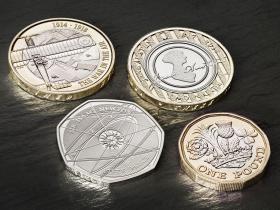
New £2 and 50p coins are also expected to be released later this year, featuring designs that pay tribute to Jane Austen and Sir Isaac Newton.

Ofcom proposes automatic compensation scheme for customers hit with broadband or landline outage

Ofcom has proposed that customers should get automatic refunds if landline or broadband services are too slow, or if repair deadlines are missed.

The telecoms regulator said that under the proposal, customers would be entitled to automatic compensation, without having to go through potentially arduous claims processes, if their landline or broadband is not fixed quickly enough after it has stopped working, if their new service is not up and running on the day promised or if an engineer doesn’t arrive for an appointment as scheduled.

  • Read more

Plusnet fined £880,000 by Ofcom for billing former customers

The group estimates that the plans would mean up to 2.6 million additional landline and broadband customers could receive up to £185m in new compensation payments each year.

“When a customer’s landline or broadband goes wrong, that is frustrating enough without having to fight tooth and nail to get fair compensation from the provider,” said Lindsey Fussell, Ofcom’s consumer group director.

She said that the benefit of the new rules would be two-fold: customers would be properly compensated and providers would want to work harder to improve the service they provide.

Ofcom said that it would set the compensation limit and that this would “reflect the degree of harm suffered by consumers”.

The new rules would not apply to mobile phone providers, based on data from Ofcom showing that they already make significant compensation payments and fewer than 1 per cent of mobile customers lose service for more than 24 hours.

Ofcom data also shows that there are 5.7 million cases each year of consumers experiencing a loss of their landline or broadband service, and each year engineers fail to turn up to around 250,000 appointments.

Earlier this week, Ofcom said that it had fined Plusnet  £880,000 for continuing to charge customers for landline and broadband services after they had cancelled their contract.

The phone provider, which is owned by BT, continued to charge 1,025 customers who had cancelled either their landline or broadband service as a result of an error in Plusnet’s billing system which meant that the lines were still recognised as “live”, Ofcom said on Wednesday.

The customers were overcharged by more than £500,000 in total, it added.

6 ways to save money without trying

Saving __money each month can feel like an impossible task, especially when inflation has now risen to 2.3 per cent while wage growth slows.

For many of us, there is simply always too much month left at the end of the money. And that’s a key reason for low savings rates across the UK; research carried out by the Money Advice Service shows that four in 10 working-age people have less than £100 saved in total.

That leaves them forced into using credit or borrowing from friends and family to cover even minor emergencies. It can feel like an unavoidable situation, however, there are ways to save without it hurting too much.

And a financial buffer will save you __money in the long term; the StepChange Debt Charity argues that half a million households could be prevented from falling into problem debt if they had £1,000 in emergency savings, while helping protect all households from financial shocks and setbacks.

Here’s how to build up a nest-egg without feeling the pinch.

Make a manageable plan

Setting a monthly savings goal pays big dividends. 

The Money Advice Service challenged a group of people with no savings to set aside £100 a month and its research showed that having a manageable target made a big difference to how much success they had.

Nick Hill, money spokesperson at the organisation, said: “For many, developing a savings habit is very achievable. Regular saving is key to building up that buffer against those life surprises. If you earn enough to set even a little aside each month that’s great – a direct debit into a savings account might be an easy way to do this, even if you start small and increase the amount with time.”

Trust in technology

We rely on tech for so much these days – for counting our steps to managing our shopping. So allowing an algorithm to work out what we can afford to save each month seems the logical next step.

And it’s coming. Chip claims to be the UK’s first automatic savings app. It analyses your spending and works out what you can afford to save based on that, automatically moving between £5 and £25 into a Barclays savings account every few days. Savings can be instantly withdrawn, so you never risk being left without cash.

Alternatively, Plum is a “little savings butler” that works in a similar way, monitoring spending and automatically setting an affordable amount of money aside each week. You can communicate with it and get an update on your situation using Facebook Messenger, making it oh-so futuristic.

Transfer cash on payday

There's a reason the first Saturday after payday is referred to as “Millionaire’s weekend” – we often spend money more freely at the start of the month.

If you set up a direct debit so that an affordable amount leaves your current account as soon as you are paid then you are more likely to save than if you wait until the end and see what is left.

Even a small amount soon adds up; £50 a month would mean a £600 nest egg saved after just a year, which would be a good start towards a rainy day fund.

Generate a new income

If saving money really is too hard on your current budget then it could be worth looking at a new income stream and then having the money you earn paid directly into a separate account.

That doesn’t necessarily mean adding an evening job to your busy day, however. There are several ways to make some extra cash that do not involve working 16-hour days. 

For example, under the Rent A Room Scheme it’s possible to lease out a spare, furnished bedroom for up to £7,500 a year without paying any tax on the money. Yes, there will be expenses that go alongside that, including increased wear and tear on your home, but if you siphon off any profits into a savings account then you could have a nest egg saved within months.

And renting a room is not the only option. It’s possible to rent out loft space, parking spaces and even garden space in today’s sharing economy. Even a small amount of profit will soon add up, particularly because the first £1,000 you earn this way will be tax-free from this April. 

Cut your debt costs

If you have debts then the idea of saving money each month may seem unlikely or even laughable. After all, if you’re paying 18 per cent on your credit card bill then saving 1.5 per cent on your cash might seem like a waste of time.

When debts are interfering with your ability to build an emergency fund, it could be worth taking a look at restructuring your debt to make it more affordable and to clear it sooner.

Recent research from TSB shows that more than half a million British people are paying more than they need to in interest because they are not switching to a better deal, with the average over-payer losing an extra £1,134 a month by not consolidating.

Nick Smith, head of loans at the bank, says: “Our research shows that people shouldn’t stop shopping around for better deals even after they have committed to borrow. We urge people to continue to take just 30 minutes out on a regular basis to review their debts as they may be one of the half a million Brits eligible to refinance to a cheaper deal, which will help them become debt-free sooner.”

Review your debts and see if it’s possible to save money on the interest. That would allow you to build up savings and clear the balance sooner, without it costing a penny more a month.

Move your money

Perhaps you have some spare cash but you simply don’t think about it. Research carried out by comparethemarket.com shows that one in three people in the UK have more than one current account, yet almost half of those use only one.

The average amount left festering in such zombie accounts is £141 and it’s at risk of earning nothing or even being lost altogether.

Jody Coughlan, head of money at the comparison site, says: “It is concerning to see how many people have over £100 sitting in these unused zombie accounts. Whilst it is a good idea to have a rainy day fund set aside in case of emergencies, the fact that so many people don’t regularly check their additional accounts is a risky move to take. 

“It is really important to regularly check your personal finances for unusual activity and prevent financial losses. Unused accounts are easy targets for hackers who might be able to steal hundreds of pounds without it being detected.”

Looking for credit card or current account deals? Search here

What kind of fraud would YOU fall for?

Last year the number of identity fraud cases rose to a record high. There were more than 172,900 recorded identity frauds in 2016 alone, according to new data from the fraud prevention service Cifas. That means that identity fraud is now well over half of all the fraud recorded by the organisation.

Perhaps you assume that you won’t fall victim because you can spot a dodgy email from a Nigerian prince who calls you “beloved” and wishes to transfer £12.3m into your account as soon as you pay him a fee. However, it’s the web-savvy digital natives who are increasingly falling for newer, more sophisticated scams. Almost 25,000 recorded victims of fraud were under the age of 30 and the number under the age of 21 rose by a third. Priya Sahib, spokesperson for the credit check company Experian, says the idea that you have to be foolish or careless to be caught out by fraudsters is wrong.

“That’s certainly not the case, but by living our lives online we are making ourselves more vulnerable to fraud, especially younger people who are quicker to adopt new technologies rather than traditional methods of storing and tracking personal information,” she explains. 

“Experian’s research has found that digitally-savvy users, older and retired households and elderly and transient renters are more susceptible to online fraud. However that doesn’t mean other groups are not at risk.”

So no group can assume they are immune, no matter what their age or computing ability. Here are some of the smartest scams and how to spot and avoid them.

Dead ringers

Organised crime groups who ring people in an attempt to steal sensitive data such as PINs are very good at what they do. The City of London’s National Fraud Intelligence Bureau recently warned that fraudsters are now even using hold music similar to that used by the bank to make the call that little bit more convincing.

Stephen Proffitt, deputy head of Action Fraud, says: “If you receive a cold call purporting to be from your bank, always end the call as soon as possible and call your bank back using the number on the back of your bank card or statement and ask to be put through to the fraud team. Tell them exactly what has just occurred.”

Dodgy discounts

Many of us are hooked on vouchers and discount codes, rely on them to bring down the cost of our shopping. But fraudsters understand that desperation makes us more easily fooled and they exploit that to steal sensitive data. Just this week Aldi was forced to warn customers that a hoax £65 voucher was being circulated online. Customers had to hand over data to claim it but it was not accepted within the shop and clicking on the download infected their computers with malware and spyware.

Just because your friends have shared it on social media it does not mean you can trust it.

Fake protection

Keeping your computer protected by antivirus software is a sensible measure in the face of a rising tide of fraudsters. However, Action Fraud has recently warned that criminals are exploiting people who try to do just that.

After buying new computers, victims who have struggled to launch their antivirus software have found themselves on fake antivirus websites. They enter contact information and are phoned by fraudsters who charge them for their subscription and even gain remote access to their machines. It’s not just new computer owners; some victims have merely been trying to renew their subscriptions, so it’s essential to stay vigilant. 

Tricky taxman

It helps fraudsters if potential victims want to believe their lies and the tax rebate scam that’s currently sweeping the UK is a prime example. Potential victims receive phishing emails and texts that claim to be from HMRC promising tax rebates. They are incredibly convincing and encourage recipients to download an attachment or click a link.

Two things then happen. Either the computer is infected with banking malware that steals data and makes identity fraud possible, or it is infected with ransomware, which locks it up until a fraudster releases it. Of course criminals demand a ransom in order to do so. 

Boiler room fraud

There have been so many new types of investment in the past few years that it is understandable some people are more willing to trust new forms of __money making scams – especially when returns on savings are so poor. The Financial Conduct Authority (FCA) has warned people – and particularly the over-55s – to be careful and wary of investment opportunities such as wine investments. 

It says that fraudsters often offer lucrative returns way above the market rate and use flattery to make potential victims feel good and confident.

Always check the FCA website to see if a firm or individual is authorised or if they are on the warning list and reject any unsolicited calls, letters and emails.

Mark Steward, director of enforcement at the FCA, comments: “Be alert to the warning signs like being contacted out of the blue, promises of low risk and/or guaranteed above market returns, special deals just for you, time pressure and, very often, flattery.

“Be vigilant. Don’t let them push you into making a decision and parting with your money. Question their claims. Check the Financial Services Register and seek impartial advice. If in any doubt – don’t invest.”

Staying safe

There’s no point pretending that you can stay on top of fraud threats by checking out the latest scams; scammers move fast and are constantly coming up with new plans and strategies.

Mike Haley, deputy chief executive of Cifas says: “With nine out of ten identity frauds committed online and with all age groups at risk, we are urging everyone to make it more difficult for fraudsters to abuse their identity. There are three simple steps that anyone can take to protect themselves: use strong passwords, download software updates when prompted on your devices; and avoid using public wifi for banking and online shopping.

“We all remember to protect our possessions through locking our house or flat or car but we don’t take the same care to protect our most important asset – our identities. We all need to take responsibility to secure our mail boxes, shred our important documents like bank statements and utility bills, and take sensible precautions online – otherwise we are making ourselves a target for the identity fraudster.”

Experian also recommends passcode-protecting mobile devices to avoid gifting thieves with information that makes it easier to steal identities, and checking the post for unexpected mail that could be a warning sign of ID fraud. It’s also useful to regularly check your credit report in order to see when people have applied for credit in your name.

But perhaps the most important way to stay safe from fraud is to remain vigilant. And that means acknowledging that just because you can spot a scam it doesn’t mean you’re safe from them all.

Looking for credit card or current account deals? Search here

UK homes could see energy bills increase by up to £445 per year

Homes across the UK could see their energy bills increase by up to £445 a year as a result of fixed-rate deals offered by 10 popular providers expiring.

A study conducted by price comparison and switching service uSwitch shows that deals offered by some of the country's biggest providers, including EDF Energy, npower, First Utility and Co-operative Energy, end on 31 March.

Several companies have recently hiked their standard variable tariffs and customers on the fixed-rate plans could face steep price increases if they automatically roll over.

  • Read more

Npower to increase energy prices by 9.8 per cent from mid-March

Before recent price rises, moving on to standard variable tariffs would have increased bills by an average of £282 a year, according to uSwitch. Now it will add an average of £369, which the website calls “a double whammy for consumers’ wallets”.

According to the survey, those customers rolling from npower's fixed-price deal onto a standard variable tariff at the end of March, would be charged £445 extra each year. uSwitch was unable to comment on how many customers would be affected by a price hike.

Energy supplier SSE earlier this month became the latest major provider to confirm that is increasing standard domestic electricity prices from 28 April.

The 6.9 per cent dual fuel increase will mean a typical domestic customer will pay on average £73 a year more, which equates to around £1.40 per week, as a result of an average 14.9 per cent increase in electricity prices.

Earlier, E.On announced that customers will pay an extra £97 a year on energy bills, while npower announced a 9.8 per cent rise. Scottish Power is due to increase prices by 7.8 per cent and EDF by 1.2 per cent.

British Gas has so far bucked the trend by committing to keeping its gas and electricity prices.

“The most competitive deals in the market are usually short lived – around 12 months,” said Archna Luthra, head of energy at price comparison site MoneySavingexpert.com.

“Once the deal ends you’re automatically rolled on to pricey standard deals – the same deals that are being hiked by suppliers right now,” she added.

Hannah Maundrell, editor in chief of money.co.uk and personal finance expert, said that customers "should not be fooled by promises of rewards for loyal customers".

"The only person you should be loyal to is yourself because you’re the one footing the bill.”

uSwitch's latest warning comes a week after Theresa May vowed to crack down on spiralling energy prices saying that "the market is not working as it should".

In a speech in Cardiff, the Prime Minister said that prices had soared by 158 per cent over the last 15 years, with the poorest hit by the highest tariffs.

She did not spell out how she planned to keep prices capped but the pledge revived memories of Ed Miliband’s plans to intervene in the energy market – condemned by the Tories at the time.

Also in response to relentless rises in prices, Ofgem last month said that it had set a temporary price cap to protect over four million households who prepay for their energy.

Responding to uSwitch's findings on Thursday, Ofgem said that it would "urge everyone to shop around for a better deal, especially if their supplier announces a price rise or if their fixed term deal is about to expire".

“With switching at its highest rate for six years, suppliers who don’t bear down on costs effectively risk losing customers to cheaper rivals."

New £1 coin: Seven things you might not have noticed that make it safer

The new 12-sided £1 coin, which comes into circulation on Tuesday, has been described by the Royal Mint as “the most secure” in the world.

The new coin will replace the existing round pound, of which about one in 30 are thought to be fake.

The round pound will remain legal tender alongside the new coin for just over six months until 15 October this year, after which retailers are under no obligation to accept it.

  • Read more

New 12-sided pound coin comes in to circulation

The high-security features include its distinctive shape and bi-metallic structure.

It also has an image that works like a hologram and micro-sized lettering inside both rims.

Around 1.5 billion of the new coins will be struck.

Here are all the subtle design features that make it safer:

1. Uneven sides

The 12-sides of the coin are uneven and make its distinctive shape instantly recognisable, even by touch, making forgery tougher.

2. Secret messages

The Government has employed a security technology company called Integrated Secure Identification System (iSIS) to fit the new coins with a special plating that can contain electromagnetic signatures.

It's also said to be especially hard to remove.

3. It's made of two metals

Like the £2 coin before it, the new pound will be made of two metals: nickel-brass on the outside and nickel plated solid alloy on the inside.

This, plus the 12-sides, is believed to make the coin safer than ever.

4. A bigger coin

The new £1 will be just under a millimetre wider than the current one, at 23.43mm compared to 22.5mm.

5. Grooves in the sides

The new £1 will have grooves in the sides, known as milled edges.

6. Secret images

Not only can the plating contain secret messages, but the design of the coin itself contains secret images, known as latent images.

It refers to pictures etched into the metal that you can only see when the coin is tipped to the light.

Like a hologram the imagechanges from a "£" symbol to the number "1" when seen from different angles. 

7. A 'hidden' security feature

A high security feature is built into the coin to protect it from counterfeiting in the future.

However, officials at the Royal Mint have not released any further details.

5 painless ways to cut your spending

When the nation's most august economic think tank warns of years of tax rises and cost saving measures, as the Institute for Fiscal Studies did this week, it's time to take note. 

The message that austerity would extend ‘well into the 2020s’ was firmly aimed at Government and businesses. But with warnings of 40 per cent cuts to major government departments, including Justice, culture, environment and others over the coming decade, and NHS funding that may keep up with inflation but won’t keep up with population growth, one option will be to pass more costs as well as taxes onto individual residents. 

Not that we’re exactly rolling in it. Creeping inflation and ‘the biggest squeeze on wages in 70 years’ thanks to the effects of Brexit – another IFS analysis – as well as the ticking time bomb that is our growing mountain of unsecured debt all mean we’ll probably need to find more cash from the same income to cover everyday expenses over the coming years. 

It already sounds like hard work, but here, to cheer you up a bit, are our top pain-free ways to cut your spending without really noticing. 

Zombie nation

Let’s start with the one that needs almost no effort - not even getting off the sofa. Spring cleaning your current account and credit cards by stopping contracts, subscriptions, direct debits, memberships and standing orders you no longer use should be top of the list. On average, Gocompare.com reckons the average spender could save £30 a month or £360 a year by being ruthless with magazine, TV, film, satellite and app subscriptions, wine club memberships and the like that aren’t doing them any favours. 

But the savings could be far higher with 14 per cent of Brits forking out more than £50 a month unnecessarily and 6 per cent paying £100 or more for unnecessary items.

Charity donations, particularly ones paid by direct debit, should be carefully reviewed too. 

Typical saving: £360 a year.

Coffee republic

Nor are we simply talking about the virtual ‘benefits’ we’re forking out for. Cutting back on everything from unwanted snacks and unopened ready meals to that extra drink after work could save thousands over a year without you really noticing the effort. 

Takeaway coffee and work lunches are the biggest culprits – yes, even the meal deals - and making your own, though, granted, it takes a bit more organisation would cut out roughly £10 of spending a day. 

If you’re a takeaway breakfast person too, that’s another £3.50 every time – around £910 annually. In other words, resisting the bacon butty and making your own breakfast everyday could pull back enough cash for a holiday.

Typical saving: £2,300 a year.

Shop smart

Regular as clockwork, millions of us head to the supermarket on a weekly, even daily basis to stock up the cupboards, fridge and freezer. They are temples of spending, employing some of the cleverest ways to part us with our cash, including placing the items with the biggest profit margin at eye-height (including children’s eye-height), and purposefully making like-for-like price comparisons difficult. 

But the best way to avoid all that is by getting into one simple habit – writing a list and sticking to it. Sounds obvious, but failing to do so could add between 20 and 30 per cent to the cost of your basket thanks to impulse buys. 

Strategically timing your shopping could save thousands over a typical year as shops discount products at the end or beginning of a shopping day or week. Try to shop late on a Sunday afternoon or weekday evening as most supermarkets discount items approaching the end of their shelf life according to a predictable daily and weekly timetable  – it’s worth learning what your local’s is. (‘Best before’ can still be eaten, often for days, after that date!) 

(For big ticket items always, always buy out of season – including cars in December, gym equipment in August, property in November, and gym memberships about now.)

Typical saving: £1,560 a year. (25 per cent of the average £120 a week household food bill, based on a family of four.)

Switch

Finally, we are realising the value and relative ease of switching our major financial products, with just under 60 per cent of us moving one or more of our top 10 financial agreements elsewhere last year. Collectively they saved around £5.5bn a year from the big three switches alone – energy, car and home insurance.

But that still leaves more than four in ten people paying unnecessarily high fees and other costs and more than a fifth of the UK population has never switched a thing, Gocompare.com warns. 

It’s time to look again at how much you’re paying for insurance, energy, broadband, mobile contracts, savings accounts, current accounts, credit card, landline and your mortgage.

Typical saving: £554 a year (On car insurance, home cover and energy bills alone.)

Know your numbers

Lastly, there’s the change that could take no effort at all, especially if you’ve done the other four. Research from Royal London suggests that just knowing what you’re spending and on what makes consumers more likely to be naturally smarter about that spending.

When they asked a sample of their customers to simply monitor their spending with a budgeting app or good old pen and paper for three months, they noticed striking changes in behaviour that lead to significant savings, including cycling to work rather than taking public transport, giving up smoking and switching to a cheaper supermarket. 

With around 21m people currently relying on less than £500 in savings for overspending or emergencies, by the end of the trial, participants reported having up to £300 available from their monthly income without having to dip into savings or cut back elsewhere to cover unexpected costs. 

Typical saving: the possibilities are endless. 

Looking for credit card or current account deals? Search here

How to pick the perfect ISA

Individual savings accounts (ISAs) used to be fairly simple; cash accounts or stocks and shares, with the allowance capped for each option and limited movement between the two.

Fast forward to the present day and there are four ISA brands, with another one about to launch.

And this has caused some confusion among savers. Nici Audhlam-Gardiner, managing director at Saga Investment Services, says: “So many changes have been made to the ISA system over recent years that people are struggling to understand the rules. Britain needs savers of all ages and keeping things simple is the best way to encourage understanding and action. 

“So we are calling for a wholesale simplification of savings - one ISA account for all ages, the same terms and benefits for any purpose.”

An over-abundance of ISAs

There are now cash ISAs, stocks and shares ISAs, Help To Buy ISAs, Lifetime ISAs, Innovative Finance ISAs and Series Of Unfortunate Events ISAs – okay we made that last one up.

But it’s important to remember that the premise of every ISA is simple – it’s a tax-free account where you can shelter your savings or investments and the taxman can’t touch the returns.

There’s a limited amount that can be saved each year - £15,240 in the current tax year but it rockets to £20,000 in 2017/18. That amount can be saved into one type of ISA or divvied up among the various options.

So here is a quick rundown of the types of ISA on offer and who they are suitable for.

Cash ISA

This is the most popular type of ISA and the easiest to understand. Cash goes in, cash plus interest comes out.

Cash ISAs are as simple as standard savings accounts; you can have a regular saver, easy access account or fixed-rate bond. And, as with any ISA, you can add to the total each year until you have a vast store of tax-free wealth – or you can simply use it to stash whatever you can afford to save.

This is a good ISA option for people who don’t like risk, who want to know exactly how much they have at any one time and who are not saving for their first house or for retirement.

As long as the account allows instant access to cash, it can be a good place to keep an emergency fund. Just make sure that doesn’t max out your allowance and prevent you investing in a tax-free account for the long-term.

Stocks and shares ISA

It’s also possible to invest in funds, bonds and shares, and still keep it all in a tax-free wrapper, meaning there will not be any capital gains tax to pay on any profits.

You usually open a stocks and shares ISA via a fund management group, online broker or fund supermarket, although some will charge fees for opening and managing your account.

With any investment there’s a risk that the value could rise or fall, so this is not the right account if you are risk averse or if you plan on withdrawing your investment in the near future.

These accounts are best for long-term investment so that a sudden dip in the stock market doesn’t wipe out your wealth just as you need to withdraw it.

Innovative finance ISA

A lot of people have been investing their cash into peer-to-peer lending opportunities via websites such as Zopa and Ratesetter, with many platforms offering better returns than the lacklustre savings market.

Although this new kind of ISA was launched last April it has not been easy to invest in one so far, as providers scrambled to get approval from the Financial Conduct Authority. However, many are now open for investment so 2017/18 is likely to see real growth in account take-up.

Some of the biggest P2P lending platforms have not yet launched, though, so some investors may prefer to hold back until the market has filled out more.

These accounts are best for investors who understand the peer-to-peer lending market and are comfortable with the risks involved.

Help To Buy ISA

These cash ISAs are designed to help first-time buyers save a deposit for their first home and can be used to help buy a property worth up to £250,000 – or £450,000 in London.

Help To Buy ISAs are regular saver accounts and it’s not possible to save more than £200 a month into them, although you can add £1,200 in the first month.

When the __money is used to buy a first home the government will top it up with a 25% bonus out of the public purse, up to a maximum of £3,000. To get the full bonus savers would need to save the maximum amount for four-and-a-half years.

This kind of ISA is a good idea for anyone saving for their first home. Be aware that this counts as a cash ISA, so it is not possible to save into both a standard cash ISA and this kind of account in one tax year. Some providers do let savers split their ISAs, though, and hold more than one ISA product in their cash ISA account.

Lifetime ISA

The new account on the block launches in April and it’s another account that offers a free government top-up. But it comes with a pretty severe health warning.

It was announced by George Osborne in what turned out to be his final Budget and it’s designed to help the under-40s save more for either their first home or their retirement.

The government will top up savings held in these accounts by 25%, although a maximum of £4,000 a year can be saved. That means there’s an annual £1,000 of government cash up for grabs.

It will be paid each year until the account holder reaches 50, meaning an 18-year-old could pocket £32,000 in bonuses if they saved £4,000 a year until they reached 50. That could happen, right?

However, a big financial health warning is needed. The __money is tied up until the account holder reaches 60, unless they want to use it towards their very first home. So, if the account holder suddenly needs cash, they can’t access their Lifetime ISA savings without paying a 25% penalty on withdrawals.

That doesn’t just remove the bonus; it also takes a penalty out of the money you yourself invested.

The Financial Conduct Authority has set out a number of warnings that providers will have to offer, including the impact a Lifetime ISA might have on pension savings and how savings might affect benefits eligibility.

This ISA account is really only suitable for people under the age of 40 who are really, really clear on its limitations.

First time ISA investing: 3 must do's

“Investing can appear complex because of the wide range of choices available and unfamiliar terminology," says Adrian Lowcock, investment director at fund manager, Architas. "However, a lot of this can be made easier by taking a bit of time before you make your first investment to know what you want to achieve from it and understand the costs associated with investing.”   

1.       Have a plan

"Before you invest, set yourself a plan, write down what your objectives and aims are from your investments, how long you are looking to invest for and if you will be investing more money each year.  Review the plan and fine tune it adding in your ability to tolerate risk and revisit this plan every time you consider changing your investments or making new ones."

2.        Choose the right platform

"First time investors are spoilt for choice with platforms at the moment, and trying to compare one with another can be complicated and what may suit first time investors now may not suit them in the future. So pick a platform that does what you need – If you are only looking for funds, as opposed to individual shares, inside your ISA then all you need is one that offers this. Make sure the platform doesn’t charge any exit fees as this means if you choose to leave and move to a platform more suitable to your needs you can."

3.       Diversify your investment

"Often, first time investors are attracted to individual shares having seen or heard stories where investors have had huge successes. However, investing in individual shares can be risky, for every success there will be plenty of disappointments you don’t hear about.  Instead first time investors (and experienced investors for that matter) can benefit from using expert fund managers who have significant investment experience and will provide diversification by investing in a number of companies through their funds."

Looking for credit card or current account deals? Search here

Donald Trump: A Fox News president

Stelter: Fox host is anti-journalism

Donald Trump's presidency is shaped by Fox News.

Trump doesn't just watch the channel, he peddles information he hears from it, citing Fox in his defense while standing alongside the leader of one of America's most important allies.

Trump tweets about stories he sees on Fox. He uses Fox graphics to advance his agenda. And he gives his TV interviews to Fox — five of the seven he's sat down for since moving into the White House.

Trump hires former Fox staffers. He promotes Fox as "fair" and attacks its rivals as "fake." And now he's dealing with an international incident provoked by a Fox commentator.

On Day 58 of the Trump presidency, none of it is surprising anymore. But it still is extraordinary.

"It's hard to think of a similarly close relationship between a president and a single outlet," historian Jon Meacham told CNN. "Politicians have always had favored reporters to whom they leaked, but I really think you would have to go all the way back to the overtly partisan press of the 19th century to find a parallel."

It seems like Trump "listens to Fox News and other cable news shows as if they were his advisers," RealClearPolitics reporter Rebecca Berg said on CNN's "The Situation Room."

Trump has 26.6 __million followers on Twitter and has been called a social media president. He's also been called a cable news president. Lately, however, he has earned a more specific title: a Fox News president.

Opinion shows like "Fox & Friends" and "Hannity" seem to influence the president. In mid-February, for instance, the president ignited a furor by citing a non-existent terror attack in Sweden after seeing a "Tucker Carlson Tonight" segment about "refugee violence in Sweden."

My statement as to what's happening in Sweden was in reference to a story that was broadcast on @FoxNews concerning immigrants & Sweden.

— Donald J. Trump (@realDonaldTrump) February 19, 2017

And the president has tweeted or retweeted about Fox segments a dozen times so far in March.

I will be interviewed by @TuckerCarlson tonight at 9:00 P.M. on @FoxNews. Enjoy!

— Donald J. Trump (@realDonaldTrump) March 15, 2017

Trump's three most recent TV interviews have been with Fox interviewers. Fox's Jesse Watters — a Bill O'Reilly sidekick who now has a Saturday night show — joked around with Trump and asked him about Alec Baldwin and Snoop Dogg, among other subjects. At the end of the interview, Trump praised Watters, said he "should be making good money" at Fox, and added, "honestly, you've been so nice to me."

On Instagram, Watters posted a picture with Trump on Air Force One, with both men flashing thumbs-up to the camera. Fox stars like Sean Hannity have also been giving Trump a big thumbs-up on a daily basis.

While the channel's highly-rated opinion shows feature both liberal and conservative guests, the shows are a rather consistent source of support for the president's agenda -- a morale booster of sorts amid skeptical coverage on other channels.

Detractors say that Trump and his aides, by relying too heavily on the conservative media echo chamber, are closing themselves off to the kind of debate and flow of information that governing requires.

Alex Conant, a GOP communications consultant, said he credits Fox with "providing balanced coverage in a media environment where so many are reflexively anti-Trump."

But he said the president "needs to depend on staff and intel briefings for his primary source of information. Otherwise there will be huge disconnects -- as we're seeing now."

Case in point: An unsubstantiated story by Fox legal analyst Andrew Napolitano made it from Fox's airwaves to the White House podium on Thursday, when press secretary Sean Spicer cited it to defend Trump's baseless claim about Obama wiretapping.

Napolitano said he had sources who alleged that Obama used the British to spy on Trump. The claim has been roundly denied, and Fox News has backed away from it.

Like many Fox personalities, Napolitano has a history with Trump. The former New Jersey Superior Court judge conferred with Trump about potential Supreme Court nominees in January.

There was a parade of other Fox personalities at Trump Tower before inauguration day, including Kimberly Guilfoyle and Jeanine Pirro.

One longtime Fox commentator, KT McFarland, is now a deputy national security adviser. Former Fox contributor Ben Carson is now the HUD secretary. A third contributor, Monica Crowley, accepted a job in the administration, but gave up the job after CNN uncovered extensive plagiarism in her past.

Several other Fox commentators, like Mike Huckabee and Laura Ingraham, held talks with Trump officials about possible roles in the administration.

Two other Fox appointments are pending. "Fox & Friends" newscaster Heather Nauert is reportedly on the verge of becoming the State Department spokeswoman. Ex-Fox contributor Richard Grenell, a former U.S. spokesman, is in line to become NATO ambassador.

Trump's ties to Fox are not new. Before Trump launched his presidential campaign in June 2015, Trump regularly called into "Fox & Friends." And the man who made Fox News what it is today, founding chairman Roger Ailes, had a friendly relationship with Trump dating back decades.

Ailes, of course, was ousted amid charges of sexual harassment before Trump's electoral victory in November. He has denied the charges.

Rupert Murdoch, the patriarch of the channel's parent company 21st Century Fox, now doubles as the chairman of Fox News.

Murdoch has also had a decades-long relationship with Trump. NPR recently reported that "Murdoch has told close associates that the nation's 45th president calls to confer frequently — as often as multiple times a week — and that he has visited the White House to meet with Trump more than once."

Murdoch's spokeswoman declined to comment on the frequency of the meetings.

Fox executives say there are big differences between its opinion shows, like "Hannity," and its newscasts, a point also recently made by chief White House correspondent John Roberts.

"Our programming department has had a relationship with the president, but the news division of Fox News — we still have to struggle as hard as anybody else to dig up information," Roberts said at a panel discussion at the National Press Club.

With Napolitano, however, the lines were blurred. He brought up the claim about British intelligence both on a newscast and on opinion shows. And he cited Fox News "sources," suggesting the network's news division had confirmed his information. But on Friday, the news division said no.

"We love" Napolitano, Bret Baier said on the air, but "the Fox News division was never able to back up those claims."

And as for the president? When he was asked about Spicer's invocation of Napolitano's claims at a press conference, Trump told the questioner to call his favorite cable news channel.

"All we did was quote a certain very talented legal mind," Trump said, adding, "That was a statement made by a very talented lawyer on Fox... You shouldn't be talking to me, you should be talking to Fox. Ok?"

CNNMoney (New York) First published March 19, 2017: 9:56 AM ET

A sloth's guide to business travel

A sloth sleepover! Yes, that
A sloth sleepover! Yes, that's a real thing

Travelers have been flocking to Portland, Oregon lately -- in fact there's been a 28% increase in tourists to the unofficial hipster city in the past five years, according to the Port of Portland. If you're headed there for work, you'll certainly want to check out the cool cafes, bookstores, and food trucks that line the city's blocks.

But the coolest thing to see in the area is an hour north at the Zoological Wildlife Conservation Center, in Rainier, Ore. The center, which saves animals at risk in the wild, has a sloth sanctuary -- its most popular attraction. During an hour-long visit, you'll learn about sloths, see them in action (or lack thereof -- they're slow), and feed them. Cost is $100 per person on a Saturday, or $300 for a private visit any day of the week for up to three people.

If that's not enough sloth time, you could even have a sleepover at the sanctuary. You'll arrive at 8 p.m. and depart at 7:30 a.m. -- perfect for watching sloths, who are most active at night. It's a bit humid in the sloth house, but you'll have satellite TV and a comfy tent with a cot to help you relax. An overnight stay costs $600 a night for double occupancy.

Just be ready to keep all talking to a whisper. Sloths can get stressed easily (more on that later).

Staring at sloths for a day can actually teach you a few things to make you a better business traveler. Here are 4 tips I picked up from my recent visit to the sloth sanctuary:

1. Sleep more. Sloths may sleep anywhere from 16 to 22 hours a day -- sleeping for longer spurts helps quicken their slothy digestive process. According to the Mayo Clinic, humans should also get a lot of sleep, 7 to 9 hours a day for adults. Sleep is especially important when you're traveling for business -- it's best to wake up rested to close that killer deal!

sloth eating portland oregon 2
A cucumber a day keeps the veterinarian away?

2. Hydrate. Sloths are constantly in danger of becoming dehydrated. Sloths at the Conservation Center are fed a lot of cucumbers, which are high in fiber and water content, to help them stay healthy. Flying, drinking alcohol, and sleeping poorly on the road can make humans extremely dehydrated. So be like a sloth: Drink plenty of water and eat fiber-filled foods to help quench your thirst.

3. Beware an invisible predator. Sloths' most dangerous predator can be stress. Sloths have a ruminant, or fermenting, gut system, explains Reagan Royale, Sloth Keeper at the Zoological Wildlife Conservation Center. Stress can kill the gut flora in their stomachs, Royale says, making them susceptible to Wasting Disease, where they basically starve to death.

"They eat, and eat, and eat, but they don't get any of the nutrients from what they ingest," Royale says.

sloths playing portland oregon
Playing with sloths is a great antidote to stress

Stress can be dangerous for humans as well, and the added pressure of a work trip doesn't help. The Anxiety and Depression Association of America offers these tips: Exercise daily (take a run outside or use the hotel gym), get enough sleep (an eye mask comes in handy), and take time out to relax (meditate using a guided meditation app on the road).

4. Don't rush. Sloths are incredibly slow-moving animals. But their slothy-ness should be a reminder to us that they eventually get where they need to be. In our rush from meeting to meeting on a business trip, we can often miss out on the fun things. Sometimes it's important to slow down so you can truly enjoy the city you are in, and turn business into sloth-filled pleasure.

CNNMoney (New York) First published March 10, 2017: 2:23 PM ET